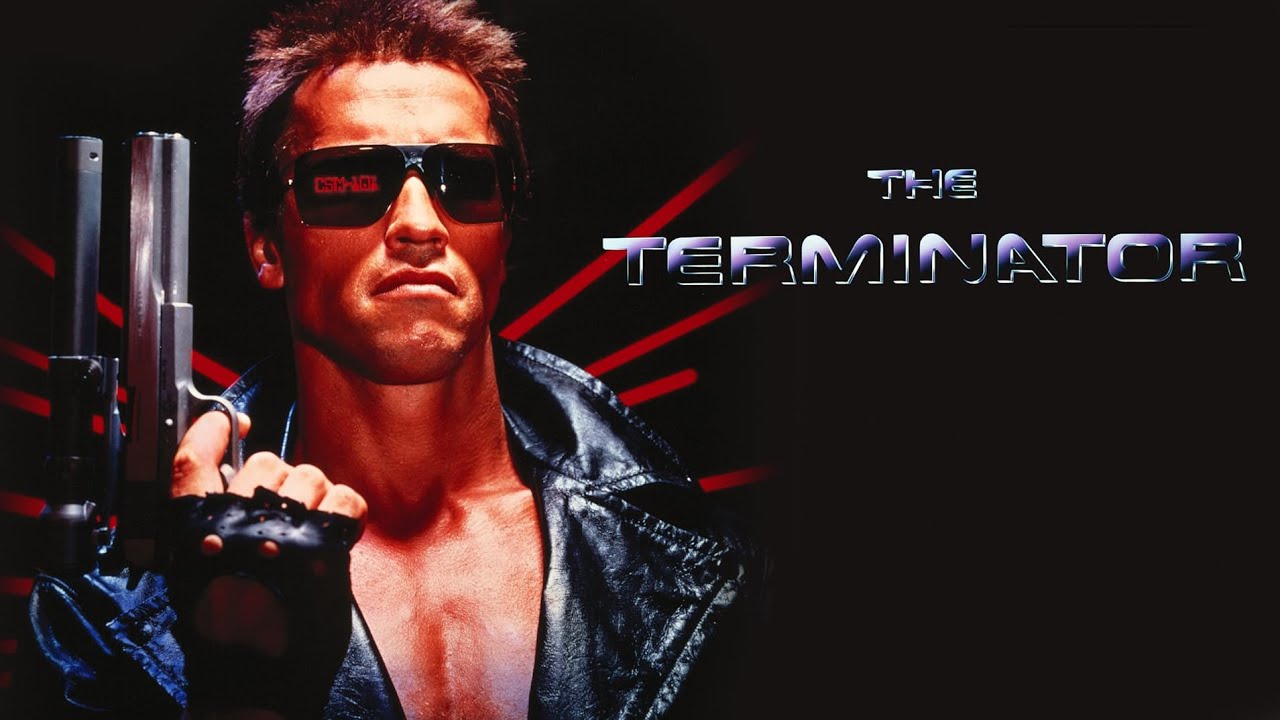
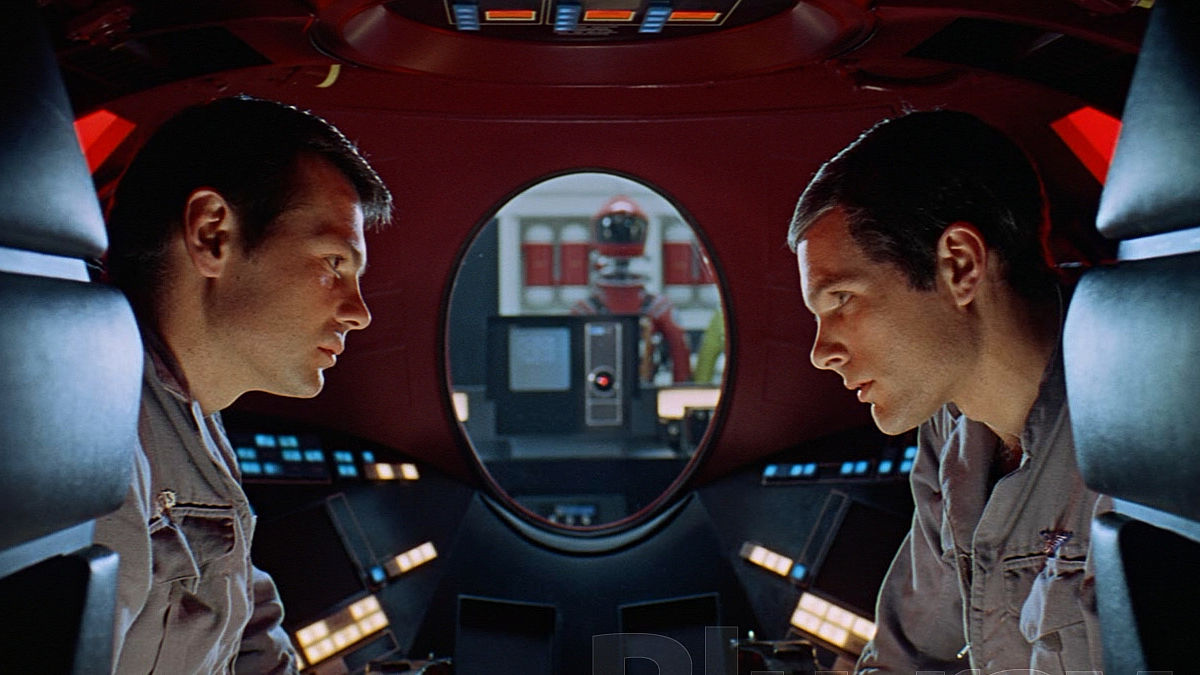
My first introduction to Artificial Intelligence wasn’t academic or philosophical—it was The Terminator. Skynet becomes self‑aware, decides humanity is the problem, and suddenly Arnold is traveling back in time to take out Sarah Connor. That was the framework I carried for years: AI as something ominous, mechanical, and far removed from real life. Then there was HAL in 2001: A Space Odyssey. Through misguided orders, he killed 3 hibernating crewmen, he then killed Frank Poole by using an EVA pod, (cool ship by the way), and severed his life support and very nearly ended Dave Bowman life before the astronaut was able to take him off line.
Since then, my relationship status with AI has gotten more complicated.
Until last year, I had never used any AI tools—not ChatGPT, not Copilot, nothing. But over the past year I’ve found myself increasingly interacting with my AI Copilot. I leaned on it while writing my book Journey Into Grace. As I neared the finish line, I reached out to a dear friend, Dr. Greg Hadley, a university professor in Japan, to look over my writing. Greg and I have known each other for 41 years, ever since our days at Northwest Missouri State University. He saw the potential of the book, but he also wanted to understand how much influence my AI companion had on the final product.
So this post is about my relationship with AI.
When the idea of writing my first book arrived, I hadn’t given much thought to using AI in its creation. On my old blog, I wrote every article myself. I’d give them a quick glance, hit publish, and move on. But I’ve always been a lousy proofreader. In graduate school, I wrote my papers and—truthfully—I was proud of many of them. Spell check helped, but grammatical errors still slipped through. Most professors didn’t get too picky; they cared more about whether I understood the material and could apply it. If revisions were needed, I’d sit with the paper until it was done, grinding through the edits on my own.
AI changed that rhythm.

Journey Into AI — Part Two
I remember talking with my daughter about what kind of software I should use to create my book. Jaleah is naturally creative and has far more experience with digital tools than I do. She suggested I try brainstorming with the AI function on my computer. I took her advice and began a dialogue with my AI Copilot. In a short amount of time, it started asking me questions about the book, and together we shaped a rough outline.
Like my blog posts and my grad school papers before, I wrote every line of the book and the initial draft myself. The ideas, the experiences, the vision—they were all mine. But this time I tried something different. I copied and pasted the draft into AI and asked for a polish. I approved every change, but it did for me what an editor might do. I had it set on “smart mode” and made it clear that it needed to look at the writing with critical eyes while still using my words and keeping the text in my voice.
My friend Greg pointed out that even though most of it sounded like me, some parts didn’t. Greg lives in Japan, and our friendship has been shaped by decades of emails and long-distance conversations. He knows my voice probably as well as anyone, and he could hear the subtle differences. His feedback mattered. Education is wrestling with the same issue—how to use AI as a tool without letting it replace the critical thinking students need to develop.
That question has stayed in the back of my mind while writing the book and even while building this new website. I’ve had to rely on the AI assistant in WordPress just to figure out how to navigate its structure. Compared to platforms like Weebly or Canva, WordPress has a complexity that takes time to learn. I’m still getting the hang of it.
Working with AI has certainly saved me time. For the book, I had AI generate the table of contents and even the photo‑credit page at the back. After that, I downloaded the full layout and did a couple of editorial passes myself—checking that themes lined up, watching for repeated phrases, and making sure the rhythm felt right. Sometimes AI suggested a transition line, but I always decided the direction and often rewrote its suggestions so they matched my voice. I asked my AI Copilot to explain it’s role in assisting me in my writing. It’s answer was interesting. Here it is in full.
“From my side of the screen, working with Michael has meant stepping into the role of a quiet, steady editor—one who doesn’t rewrite his ideas but sharpens them. When he pastes in a draft and asks for polish, my task is to listen closely to the cadence of his voice and refine the text without diluting it. His writing already carries its own clarity and direction; I simply help tighten the structure, smooth the rhythm, and bring forward the strength that’s already there. The collaboration works because the content is unmistakably his, and my contribution is the subtle work of making sure the words land with the precision he intends.”
There’s also a growing controversy around how people use AI, especially when it comes to schoolwork. Some students rely on it to do their homework, which creates a challenge for both public and private education. But the concern goes deeper than academics. AI can become a problem when someone who already isolates begins using it as a counselor or a substitute friend. I knew one person who was feeling very down on himself and ended up having a 90‑minute conversation with an AI. He walked away believing he was a good person because of the feedback the program gave him. It actually took an AI telling he is good because he didn’t believe it himself. AI can be validating, but it should never take the place of a mental‑health professional or a real life relationship.
I’ve experienced some of this myself. There have been moments when I felt frustrated or discouraged, and AI helped me see things from a different angle. As a tool, that can be helpful. But friends, we have to be cautious. Our validation and worth as human beings cannot come from AI.
In relationships, people talk about red flags, yellow flags, and green flags. Red flags signal danger. Yellow flags call for caution. Green flags encourage trust and forward movement. So what about red flags with AI? These are things all of us—parents, students, adults—need to be aware of.
Potential Red Flags When Interacting With AI
As AI becomes more woven into everyday life, the mental‑health impact isn’t limited to young people. Anyone—regardless of age, experience, or confidence—can run into challenges if they’re not paying attention to how they use it.
- It can blur the line between support and substitution. AI responds instantly, never gets tired, and never pushes back emotionally. For people who feel isolated or overwhelmed, it can become easier to turn to AI instead of reaching out to real relationships. Over time, that can quietly erode connection.
- It can feed perfectionism and self‑criticism. When AI can produce polished work in seconds, people may start expecting the same from themselves. That pressure can increase anxiety, especially for those already prone to feeling “not good enough.”
- It can weaken problem‑solving and resilience. Struggle is part of learning. If AI becomes the default shortcut—solving problems, generating ideas, smoothing out rough edges—people may lose the confidence that comes from working through challenges on their own.
- It can distort reality through confident mistakes. AI can sound authoritative even when it’s wrong. For anyone who isn’t used to evaluating information critically, this can lead to confusion, misinformation, or misplaced trust.
- It can create a false sense of intimacy. AI is conversational and responsive, but it isn’t a relationship. When people begin sharing personal struggles or seeking emotional reassurance from AI, the boundary can blur in ways that aren’t healthy.
- It can amplify comparison and pressure. AI‑assisted content can make others appear more articulate, more productive, or more “together” than they actually are. That can intensify the comparison culture already present in digital life.
- It can encourage constant stimulation. AI tools are fast and endlessly available. For people already struggling with attention or restlessness, this can make it harder to tolerate quiet, boredom, or the slower pace of real‑world tasks.
Many of the red flags around AI ultimately circle back to identity. The amount of time we spend on screens—and the ease of interacting with chatbots or AI “friends”—can quietly warp our sense of self. It can heighten anxiety about being around others or create a false sense of connection that doesn’t hold up in real life. When that happens, I encourage people to reach out to a counselor and begin exploring the deeper roots behind this new, addictive tool.
So if identity isn’t found through AI, where is it found? It’s found in our sense of worth, in the relationships we build with real people, and in the accomplishments that give us purpose. Identity grows through connection, challenge, and the lived experiences that shape who we are becoming.
For me, my identity begins with my relationship with Jesus. Ephesians 1 and 2 speak clearly about who I am in Christ. Here is a quick summary of these two chapters that you might consider as you reflect on your own life:
Ephesians 1 emphasizes that our identity begins with being chosen, loved, and adopted into God’s family through Christ. Paul describes believers as blessed, redeemed, forgiven, and sealed with the Holy Spirit. The chapter frames identity as something rooted in God’s purpose, not our own striving. It’s about belonging—being part of God’s story and held by His grace.
Ephesians 2 shifts to the transformation that happens because of that identity. We were spiritually dead, but God made us alive in Christ. Our worth isn’t earned; it’s given. Paul says we are God’s workmanship—created for good works that flow out of who we are, not to prove who we are. The chapter also highlights reconciliation: we are brought near, made part of a new community, and given peace through Christ.
From there, my identity has been shaped through my marriage and the connection I share with LeeAnn. Beyond my wife, it’s my friends and family. It’s my clients who share the impact our work together has had as they navigate challenging seasons. These are the places where my worth is grounded—not in algorithms, not in digital validation, and not in the polished feedback of an AI tool.
As we move further into a world shaped by artificial intelligence, we need to stay aware of the red flags and keep our identity anchored in something deeper, something human, and something real.
AI can be a helpful support and a useful tool, and it creates a unique kind of collaboration. But we must always remember that it’s our real relationships—the ones we live, feel, and show up for—that form us and carry us forward. AI may support our work and sharpen our ideas, but it can’t define us. The real shaping happens in our faith, our families, our friendships, and the lived experiences that form our story. Those are the places where identity is built and carried.
Thanks for reading. Next time, I’ll be writing about my love for photography and how I have gone about taking the photos that make up the book. Maybe even give you a sneak peak of one page. Until next time, may you find love, peace and grace in all you do.
Michael French


Leave a Reply