By Michael French, MA, LPC

The Pursuit
Hello and welcome back to Journey Into. In a few months, my life group from church will be volunteering at a women’s sober living house, and one of the leaders asked if I’d be willing to share something. This piece is part of what I plan to bring.
People in sober living often come from a place of hitting bottom and starting over, but you don’t have to battle addiction to struggle with a dream. Anyone can feel discouraged or unsure about the path ahead. The real question for all of us is: do we have the perseverance to pursue what matters?
Before we talk about obstacles and “dream crushers,” I want to start with a simple question.
When was the first time you tried to pursue a dream?
For me, it was when I was little.
When I was a little boy, I had some dreams. Back when I was eight years old, Evel Knievel was an American stunt performer and artist, and my ambition was to be just like him — to learn how to jump cars and buses and who knew what else. My friend Steven Lee and I used to jump ramps. His backyard sat on a hill and made for a perfect launch point for our death‑defying stunts.
Before we attempted the jump on our own bikes, I tried it on his bike and he tried it on mine — and we were both successful. Then we tried on our own bikes. I was next on my Western Flyer. I think the board might have been weakened or even cracked from the earlier jumps, because as my bike hit the ramp, I started up into the air but the board broke.
I flipped forward, fell off the bike, hit the ground, and the bike landed on top of me. I lost consciousness for what felt like an hour but was only seconds. When I came to, I had a gash on my chin and another just below my nose.
Steven’s mom came running out when she heard my cries. I pushed past her and screamed all the way home. That night Dad took me to the ER, and when the doctor looked at me, he asked what I was doing.
I told him, “I was trying to be Evel Knievel.”
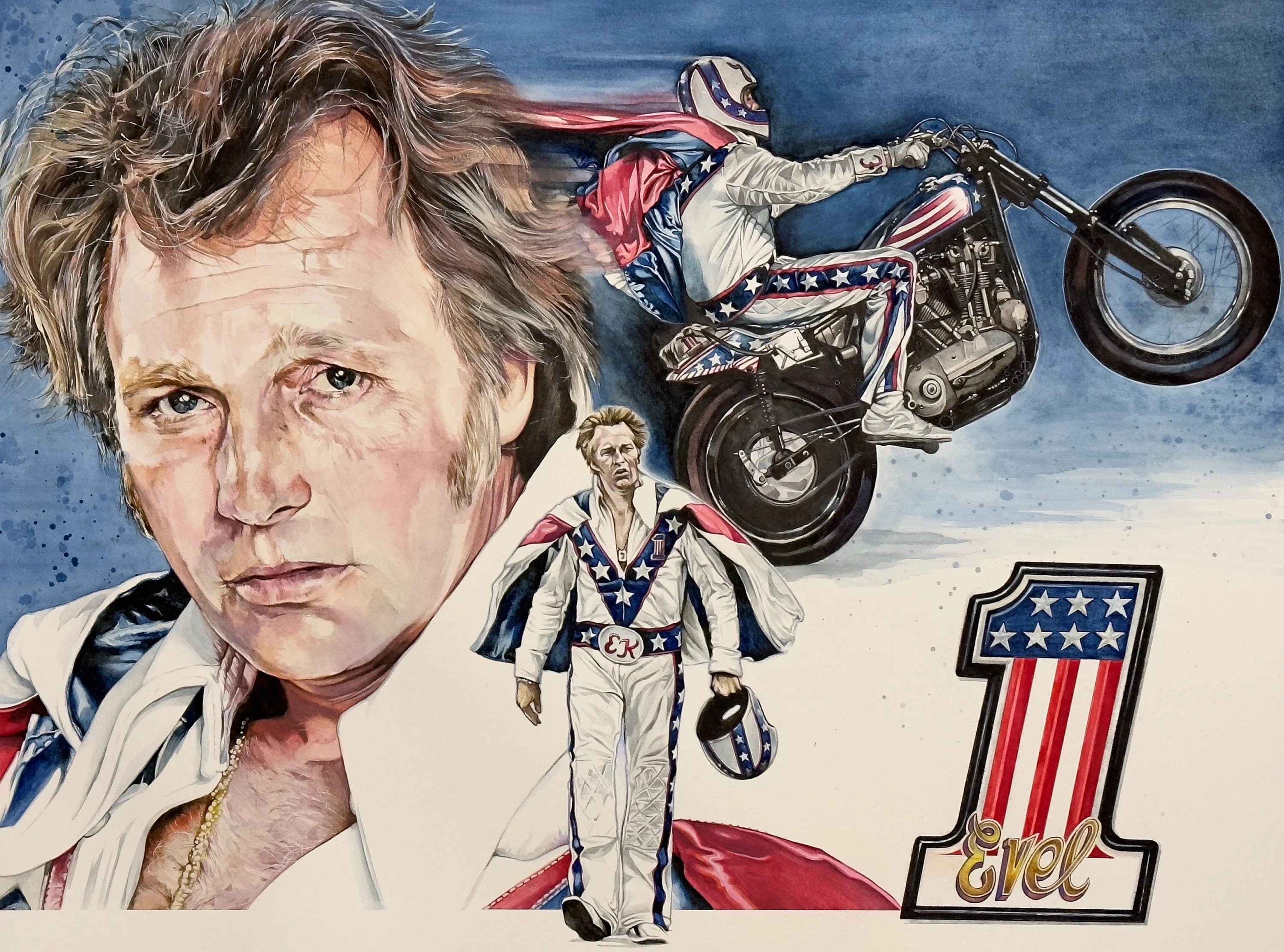
That dream ended when the doctor suggested I might want to rethink that career path. Years later, I found out there was a museum dedicated to Evel Knievel, and I made a trip to see it. It was pretty cool walking through the exhibits. Two moments stood out to me. One was seeing the rocket sled he used to jump the Snake River Canyon. He wasn’t successful, but standing there in front of that machine, you could feel the scale of what he attempted.
The other moment that stood out to me was seeing the sheer amount of pain medication he took over the years. Every broken bone, every crash, every attempt that didn’t go according to plan — it all added up. I’m honestly grateful my childhood dream ended before I ever had to experience even a fraction of what Evel went through.

So is this post about becoming a daredevil? Not exactly. But that eight‑year‑old kid on the Western Flyer was onto something — there’s something in all of us that wants to reach for something bigger than our current reality.
For most of my life, I didn’t have a dream that grabbed me by the collar. I had interests, detours, and a few wild ideas that went nowhere. Astronaut? Terrible at math. Visual effects artist after seeing Star Wars? Nothing came of it. I drifted more than I dreamed.
That changed when I met LeeAnn. And it changed again — in a deeper, more unexpected way — earlier this year, when the ideas for Journey Into Grace began to take hold. That’s when something shifted from interest to calling. Once it did, I couldn’t stop. Ninety‑five percent of the book written. Two websites built. A photography project launched. All of it growing out of one quiet creative impulse that refused to stay quiet: Write a book with pictures.
That’s what a real dream does. It doesn’t ask permission. It just starts.
When I began writing Journey Into Grace, none of those websites existed. The floodgates opened, and this creative, beautiful, and surprisingly inspiring thing took hold of me. It felt less like a project and more like something alive.
But doing all of that isn’t the conclusion of the dream. The dream is to see the book published and to see people actually buying it. While I was writing — and even now — I don’t know the outcome. All I know is that I’m supposed to write and leave the outcome to God.
If You Build It…
Another one of my all‑time favorite movies is Field of Dreams. I still tear up every time I watch it, especially at the end when Kevin Costner’s character finally gets the chance to play catch with his dad. One night, Ray hears a voice — a dream, a vision, a calling — that gives him a mission that changes his life forever. Just a simple line:
“If you build it, they will come.”
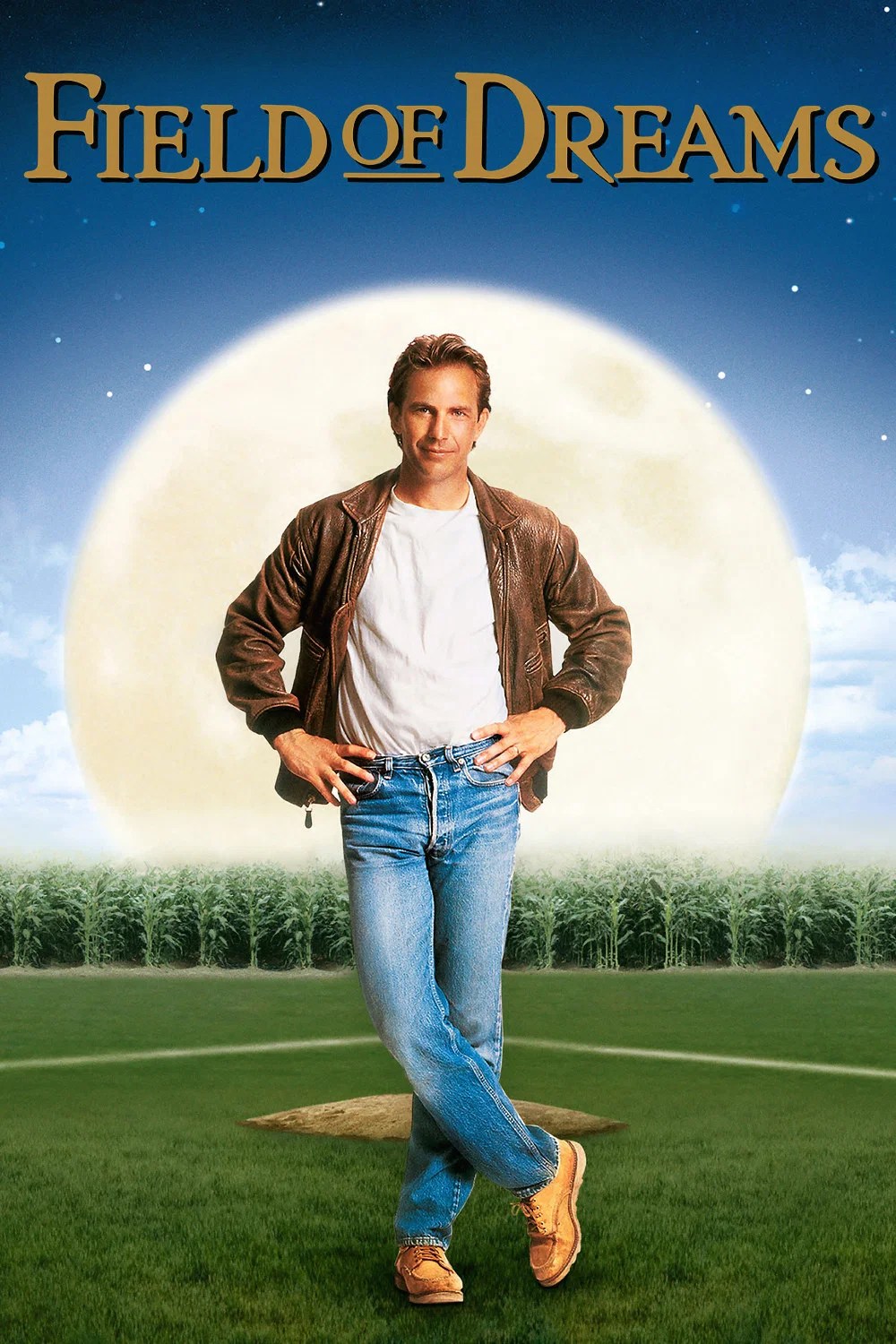
Along the way, Ray Kinsella faced a journey unlike anything he had ever experienced. He carried the memory of his father — the pain, the distance, and the unresolved pieces of their relationship. Following this strange calling wasn’t easy. He had to trust the voice, trust the vision, and let other people play a part in fulfilling it. Ray wasn’t completely sold at first, but slowly others began to believe in him and what he was building.
Construction on the ballfield began. His brother‑in‑law, Mark, tried to convince him to sell the family farm. By then, the field was finished, and players from decades past were stepping out of the corn. The work was hard, and financially Ray was losing money. He wavered. He questioned whether he had made a huge mistake.
But then his daughter — and the reclusive author Terrance Mann, played by James Earl Jones — reminded him of the deeper truth behind all of it: the power of baseball, the way it connects people, heals old wounds, and brings generations together. Check out the film clip below:
The thing with dreams is that no matter how exciting they feel at the beginning, adversity eventually shows up. The long process of creating, building, and staying committed takes hold. Even George Lucas faced it. Several movie studios turned down his idea of a science fiction movie. The technology to make the film he wanted had to be created. Many of his filmmaking friends questioned the validity of a movie “from a long time ago in a galaxy far, far away” when they viewed an early cut of the film and doubted whether it could succeed. No one had any idea what was about to be unleashed.
It’s important that we learn from people who fought for their dreams to happen. A lot of people start strong — the idea looks promising, the energy is high — but when the process becomes hard, they give up. The dream fades because the resistance feels bigger than the calling.
Here are a couple of examples:
J. K. Rowling
J. K. Rowling’s dream didn’t come from success — it came from one of the hardest seasons of her life. Before Harry Potter ever existed, she was a single mother living on government assistance, battling depression, and trying to hold her life together. She wrote the first book in cafés because she couldn’t afford heat in her apartment. Her daughter slept beside her while she worked.
Every publisher she approached rejected the manuscript.
Rowling wasn’t chasing fame. She was trying to write something meaningful at a time when everything around her felt like it was falling apart. The dream survived because she kept going when it would have been easier to quit. When a small publisher finally took a chance on her, everything changed — but the breakthrough came after the season that nearly broke her.
Her story reminds us that sometimes the dream is born in the very place we think disqualifies us. And all the success that followed — the books, the movies, the theme parks, even the new streaming series — grew out of a dream she refused to abandon when life was at its hardest.
Dallas Jenkins
Dallas Jenkins is the creator of The Chosen. What most people don’t know is that the show almost never happened — and that the dream behind it was forged in one of the worst seasons of his professional and personal life.
Before The Chosen ever existed, Dallas Jenkins was coming off one of the most painful professional moments of his life. He had directed a feature film for a major studio, and it was supposed to be his breakthrough. Instead, the movie flopped. The studio pulled back. Opportunities dried up. Jenkins described that season as feeling like his career had collapsed overnight.
He went home discouraged, embarrassed, and unsure if he even had a future in filmmaking. For a while, he thought the dream was over.
But in the middle of that disappointment, he created a small, simple short film for his church — a Christmas story told from the perspective of the shepherds. It wasn’t meant to be a comeback. It wasn’t meant to launch anything. It was just something he felt called to make.
That short film unexpectedly caught the attention of a group of producers exploring new ways to fund faith‑based projects. They approached Jenkins with an idea: What if you built a series about the life of Jesus — and let everyday people fund it?
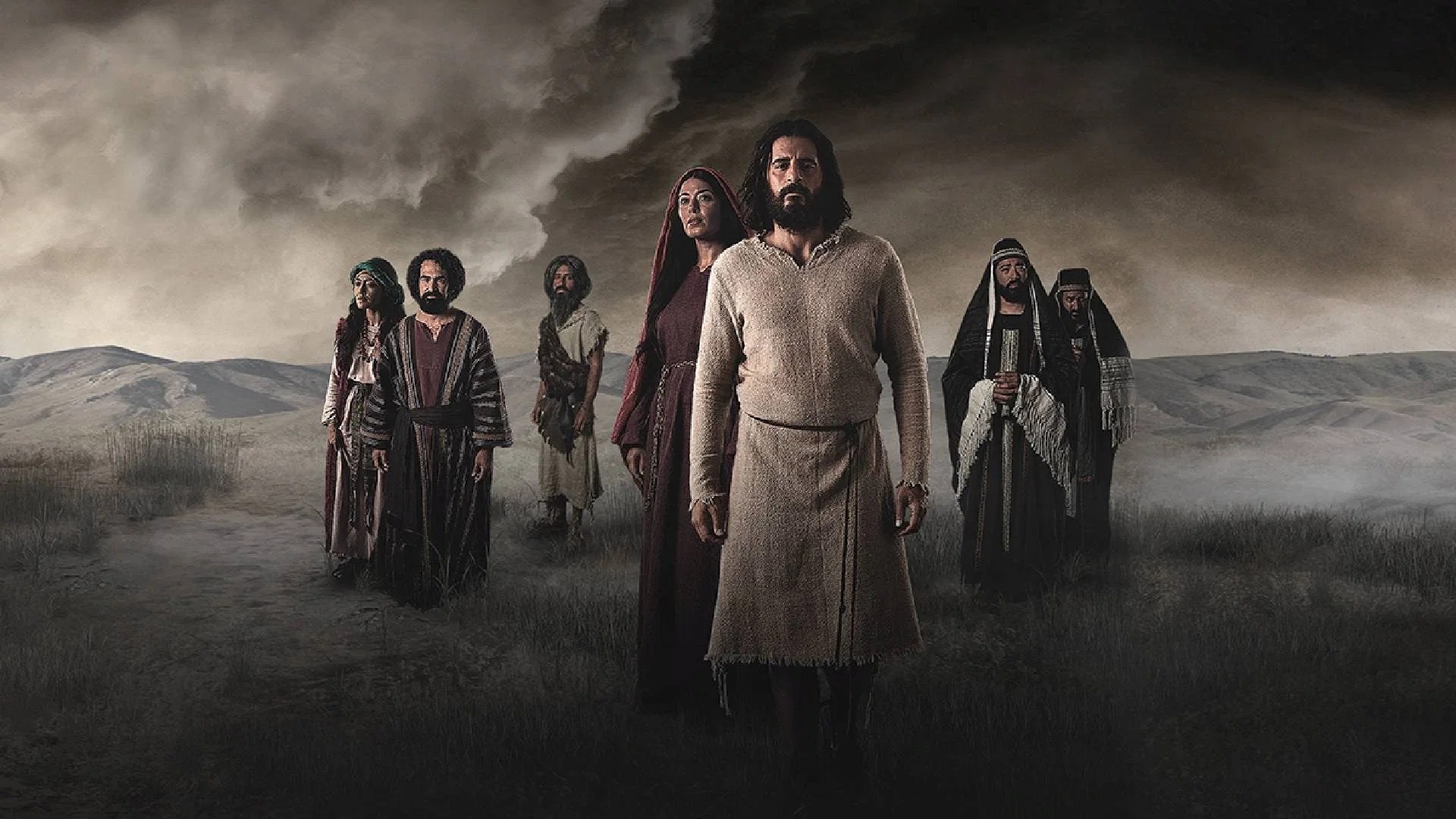
It sounded impossible. No one had ever crowd‑funded a full TV series before. Jenkins had every reason to doubt it. He was still carrying the sting of failure. But he decided to take the risk.
The result became the largest crowd‑funded media project in history.
The dream didn’t come from success. It came from a season where everything looked like it had fallen apart. Jenkins often says that The Chosen exists because God needed him to be humbled enough to listen, trust, and build something without knowing who would show up. Today, Dallas is filming season 7 — the conclusion of the series. And even as the dream unfolded, he faced constant criticism, sometimes from people who claimed to be believers.
My Reflection
On Facebook, I have friends who have become published authors. They pursued a dream. They faced their own potential dream crushers and kept going. Right now, I feel this whole Journey Into project is my dream and calling. I believe God has made it clear that my job is to write and not focus on the results. That’s hard — especially when I wrestle with validation and the questions the enemy keeps throwing at me. Will the work matter? Will people read it? Will anyone buy it? Most of us want to know the end result before we start. We want to know if all the work will pay off, if it will be worth it.
I’ve spent hours and hours working on the book, and in the last several weeks I’ve been writing new articles every week. Why am I doing this? I think because I’m meant to. The younger me would never have taken on something like this. Back then, I didn’t believe in myself — and honestly, I’m still working on that today.
But here are a few things I’ve learned.
1. Pursuing a dream is hard work.
There’s no shortcut. You will face resistance, and most of it will come from inside your own head. The voices that say you can’t, you shouldn’t, or you’re not ready will show up early and often. Expect them — but don’t let them lead.
2. Doubt will try to use your past against you.
Doubt loves to replay every stumble, failure, and moment you wish you could erase. I’ve had to fight this myself. When doubt tries to drag you backward, don’t give it authority. I remember one person who, whenever I shared something I wanted to try, would roll their eyes and say, “Well, I wouldn’t do that.” It was their way of discouraging me or signaling disapproval. In the past, if I dwelled on that for too long, uncertainty would start to cloud my vision. Doubt is loud, but it isn’t accurate.
3. You must protect the vision.
There have been moments when the vision for my book felt shaky — when questions from others made me pause, when their feedback challenged me, or when I simply doubted myself. Those moments tested how committed I was. I’ve taken some of that feedback to heart. I’ve made adjustments and even added new elements to the book based on thoughtful input from others. But through all of it, I’ve stayed true to the vision I believe God gave me from the beginning. That vision is worth fighting for.
It reminds me of Ray Kinsella in Field of Dreams. People thought he was crazy for building a baseball field in the middle of a cornfield. It made no sense to anyone except him. Dreams often look unreasonable from the outside. Listen to wise feedback, but don’t surrender the heart of your vision.
4. You need a community around you.
My wife, my friends, other authors, and early readers have encouraged me when I doubted myself. Their support didn’t rewrite my dream — it strengthened it. You need people who will remind you who you are when you forget. Community doesn’t carry the dream for you, but it helps you keep going.
5. Enjoy the experience along the way.
The creative process has been one of the most joyful parts of this journey for me. Turning thoughts into words, pairing them with photos, and watching the book slowly take shape has been a gift. I once heard a message at a church in Arizona about “the beginning, the end, and everything in between.” That in‑between is where most of the real work — and real joy — happens. Focusing on the present keeps me grounded and if I look too far ahead, I might miss something that is crucial to the development of the book and companion websites and writing.
I’ve learned that God often uses the most unlikely people to create something meaningful. I’ve started to believe He’s doing that in me. I’ve begun to ask, Why not me? Why not swing for the grand slam or reach for the touchdown, even if I don’t look like the ideal candidate?
I have goals for this book, but I’m learning to slow down and enjoy the journey instead of rushing to the finish line. It isn’t easy, but I know that when I look back in a few years, I’ll be grateful — whether the book sells or not. I don’t take this in‑between season for granted, and I hope you won’t either.
Closing thoughts and a sneak peek.
Never give up in your pursuit of your dreams, no matter where you are in your journey. I’m still chasing mine, and while some things are coming into focus, the ending is nowhere near clear. That remains to be seen.
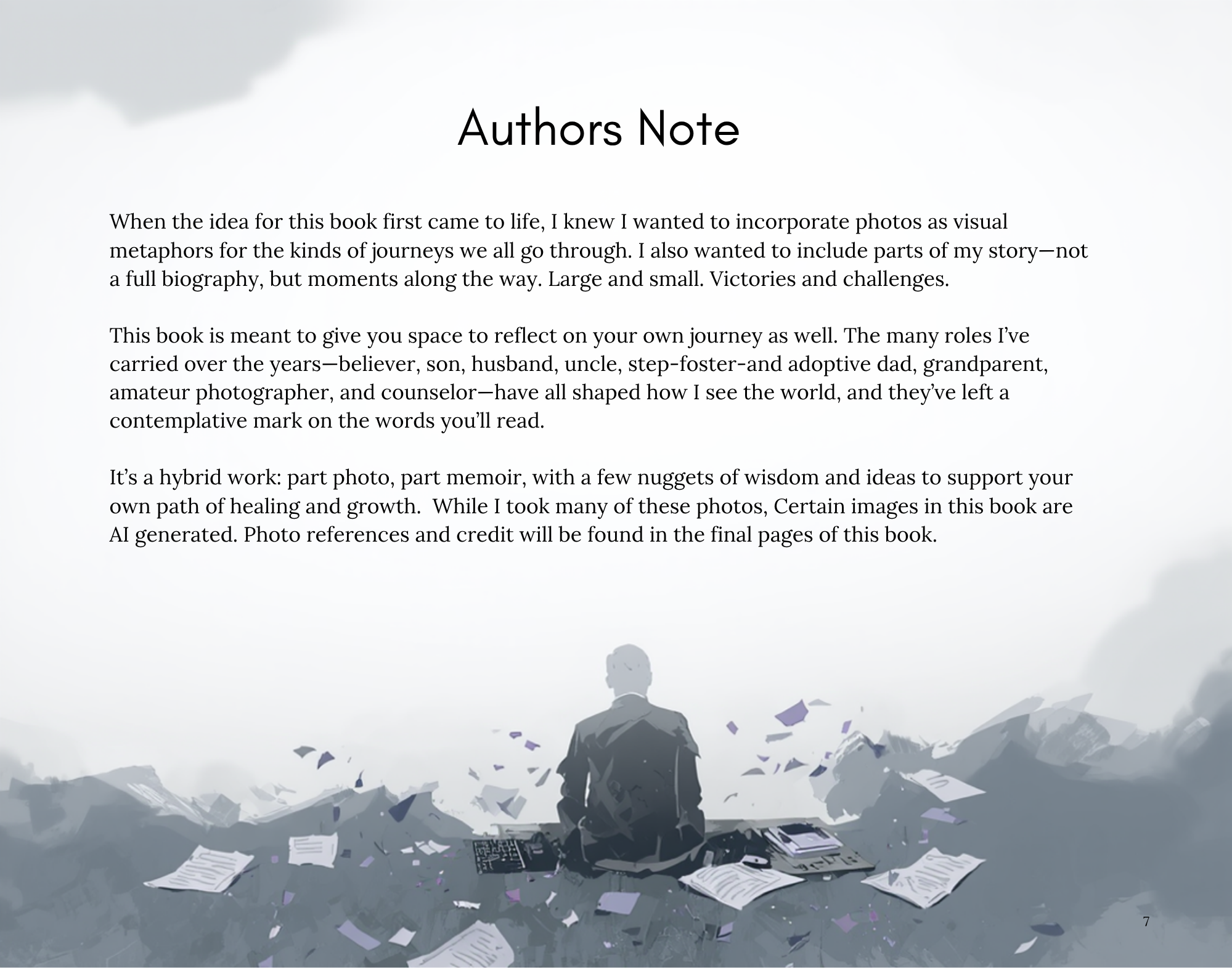
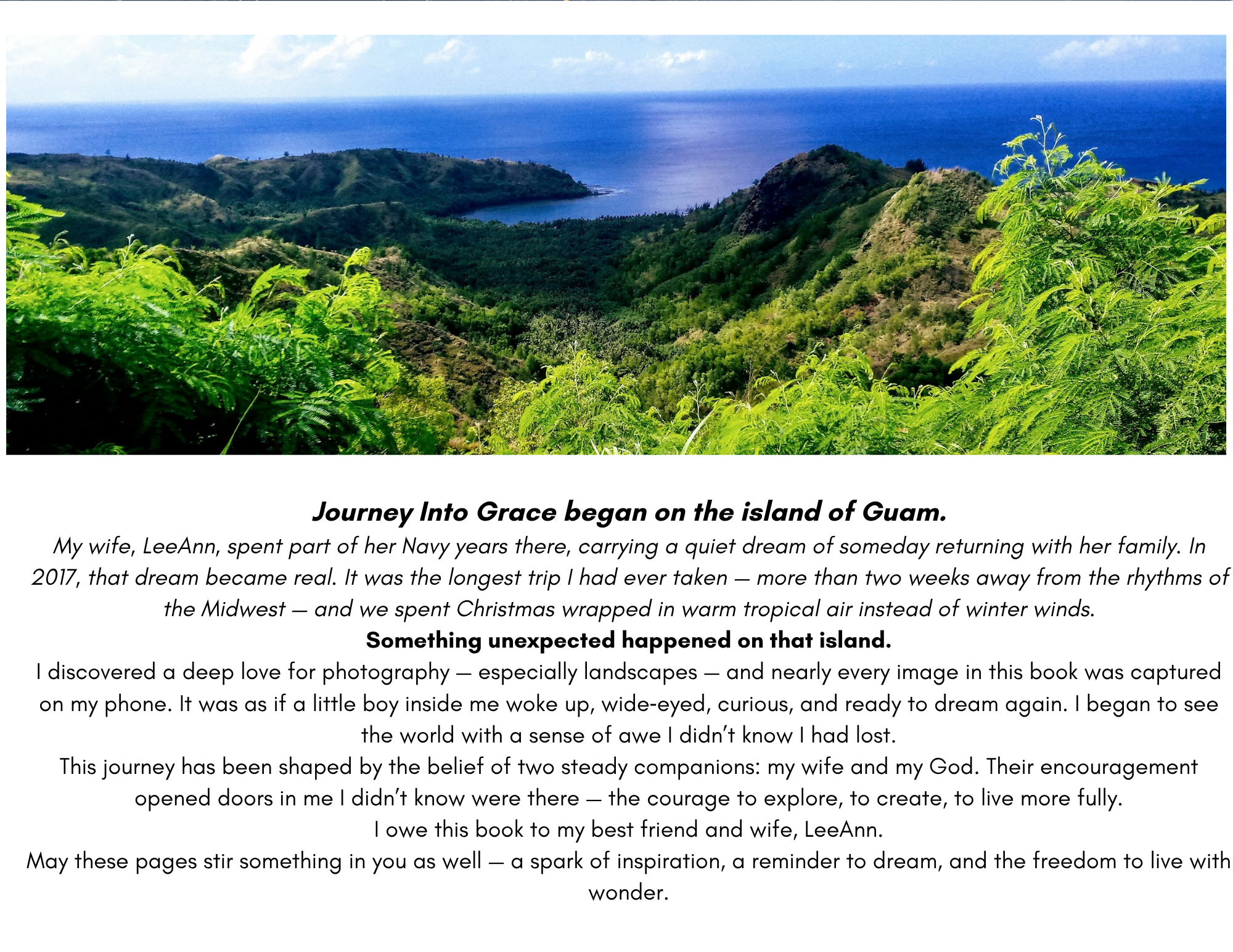
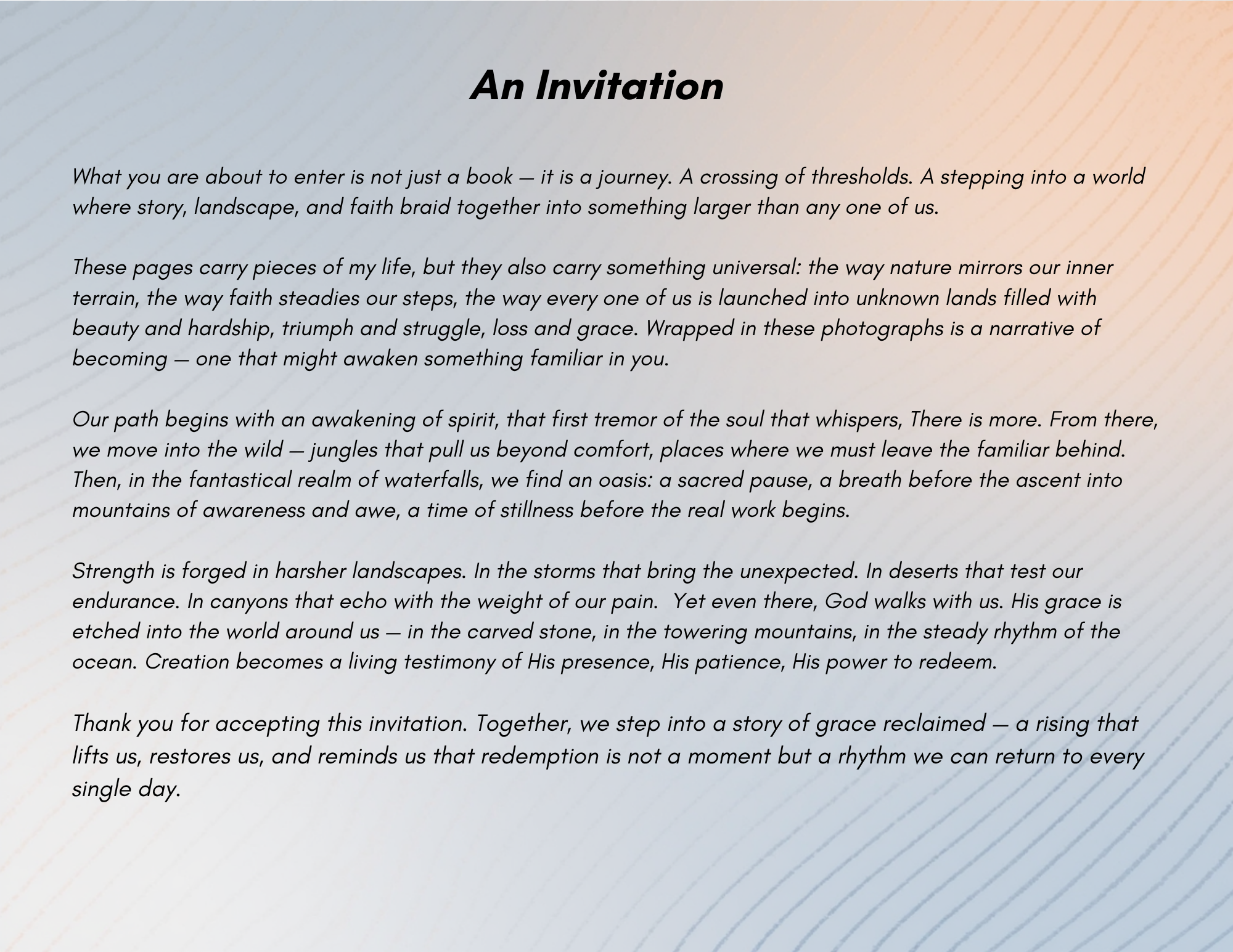
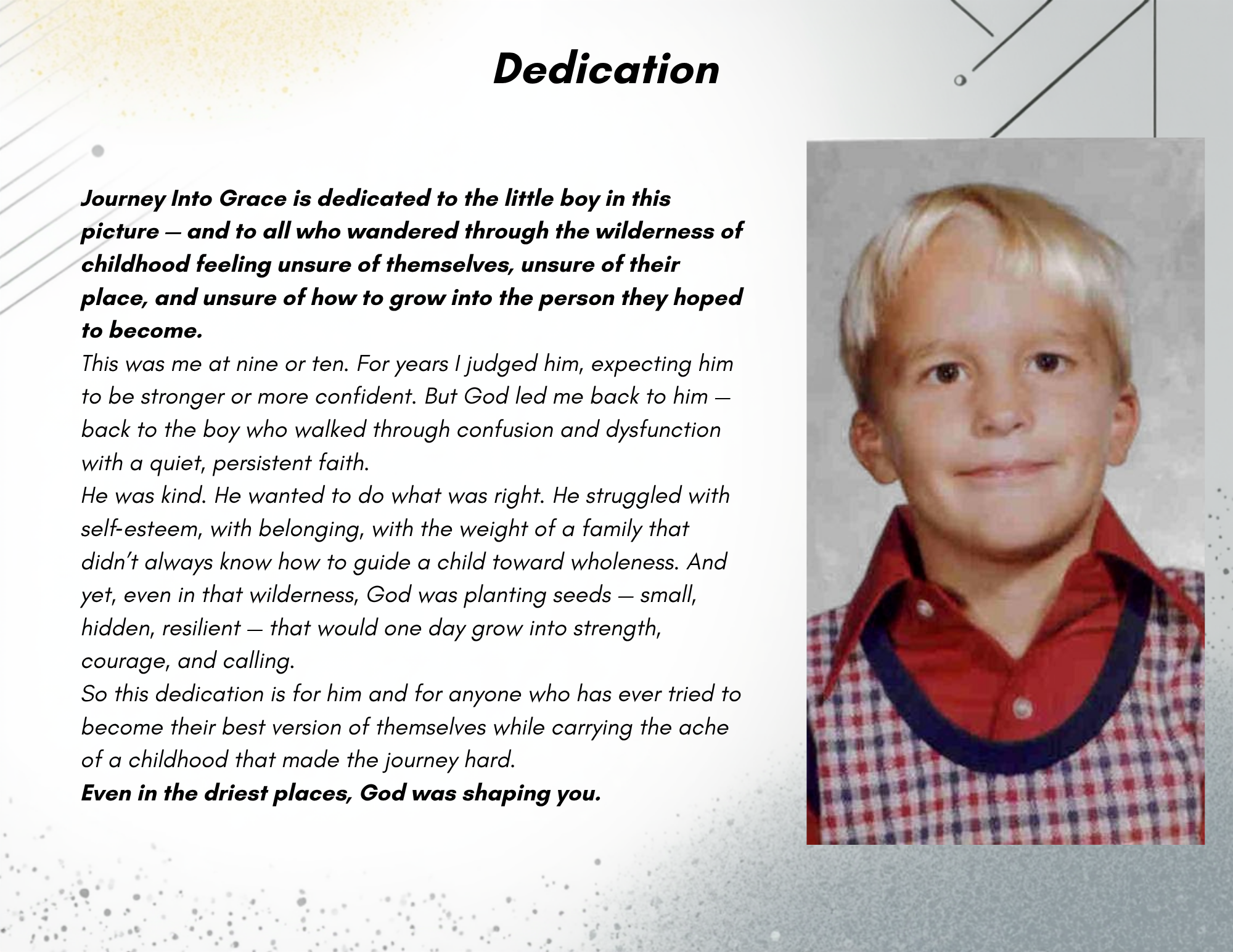
To give you a glimpse of the dream that’s been growing in me, I want to share the cover and four pages from the beginning of Journey Into Grace. I haven’t shown these to many people — only a small handful. Enjoy this sneak peek, and until next time, may your journey lead you into peace, love, and grace. And maybe, just maybe, into a new dream.



Leave a Reply