By Michael French, MA, LPC
National Suicide Prevention Month began in 2008, and every September there’s a renewed effort to increase awareness, deepen understanding, and encourage honest conversations about mental health and suicide. The National Alliance on Mental Illness describes this month as a time to “raise awareness, spread hope, and spark meaningful action around one of the most urgent mental health issues of our time.” The goal is simple but profound: to help individuals, families, and communities talk openly about suicide, recognize warning signs, and seek help when it’s needed.
Before we get too far into this writing, if you or someone you know has thought about suicide or even had made an attempt, please reach out to someone, the 988 Lifeline is the national Suicide and Crises hotline. There is also a text line. Both are available 24/7. If you are triggered in anyway by the following piece of writing, please reach out to a loved one or call 988. Below is a link to additional information.
As this month is past the halfway point, I’ve found myself thinking about someone whose story has shaped my life in ways I’m still discovering—my sister Shelley. She died on October 4, 1998, just days after her 29th birthday, and this October marks twenty‑seven years since we lost her. I’ve written about my dad, about 9/11, about forgiveness and healing, but I’ve rarely written about Shelley. Maybe because her story has always felt heavier, more complicated, and harder to hold.
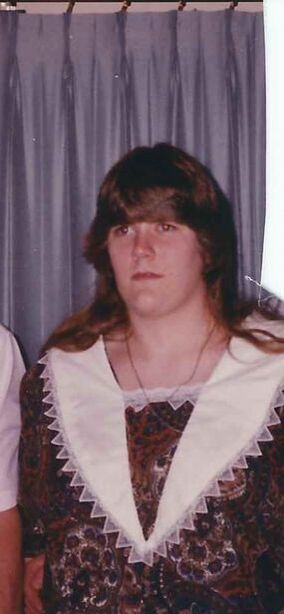
This is my sister Shelley. It’s one of the few photos I have of her as an adult. She didn’t like having her picture taken, and she almost never wore dresses. I can count on one hand the number of times I saw her in one. She struggled with her weight for most of her life, and that made moments like this—standing still for a photo, dressed up—rare.
This picture was taken in 1991 at our dad’s wedding to his second wife, Kathy. As a counselor now, I look at her expression and see what I couldn’t name back then: a flatness, a touch of sadness, a sense that hope felt distant. This was nearly seven years before she died.
Her birthday is coming up on September 23rd. If she had lived to see this year, she would be turning fifty‑seven.
My grief from my sister’s passing has long since settled. Yet there isn’t a day that goes by when I don’t have at least a thought or two about her.
Her story matters. The impact of her death rippled through our family, her friends, and especially her two boys. At the time, she was in an estranged marriage, unemployed, and living with our mother along with Luke, who was five, and Adam, who was three. The stress she carried was immense. In the end, depression and hopelessness convinced her that ending her life was the only way to stop the pain.
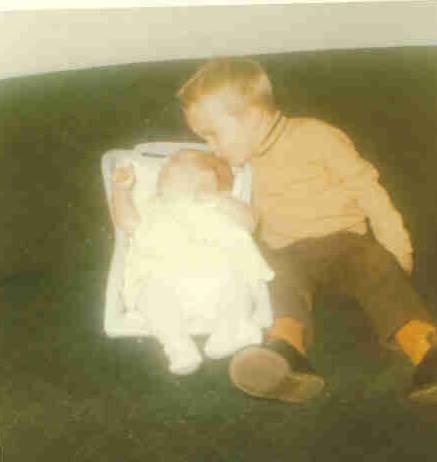
Our early years.
Shelley was born on September 23, 1969. Like me, she was adopted. Her birth mother made the difficult decision to place her for adoption, and a few days later she arrived at our home. The photo above is the first picture ever taken of us together. It was late September 1969, and I was two and a half, meeting my baby sister for the first time. She came home on September 29th—an ordinary day for most people, but one that would become meaningful in our family. Years later, her first son, Luke, was also born on the 29th. A small, unexpected thread connecting their lives.
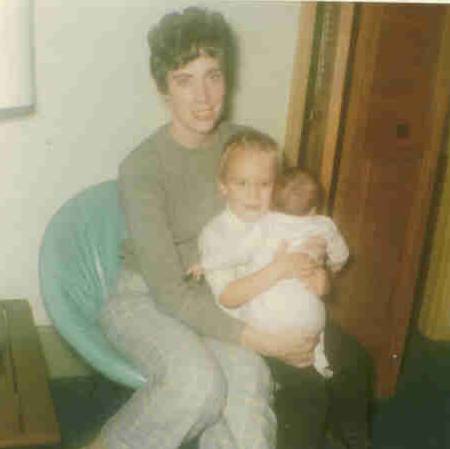
I only have snapshot memories of our earliest years together, but the next two pictures speak volumes. And yes—my apologies to my mother Marilyn and to you, the reader. It was the late 60s. Hair styles and fashion trends were… ambitious. The photo quality doesn’t help either. My dad used a Polaroid Instamatic camera, one of those vintage models where you take the picture and a damp photo pops out, and you wave it around until the image slowly appears.
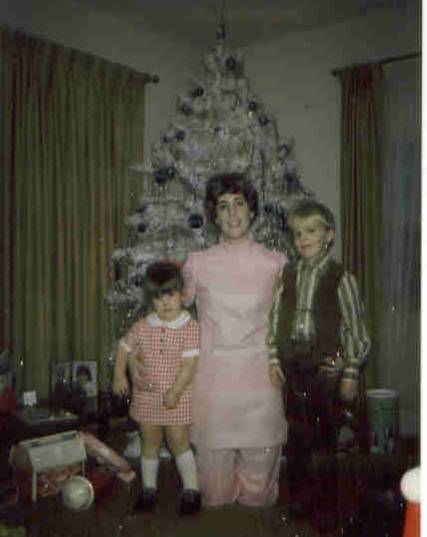
The photo to the right was taken around 1971. The bright white Christmas tree is a dead giveaway of early‑70s décor, and my mother’s pink outfit fits right in with the era’s fashion choices. Oh, how far our collective fashion sense has come. We even had the classic Fisher‑Price Little People toys. On the left side of the photo is the barn — the one that mooed every time you opened or closed the door. To the right is a View‑Master I had gotten for Christmas. Anyone who remembers the View‑Master era is officially dated, myself included.
Growing up
Shelley loved the Fisher‑Price Little People collection and could play with them for hours. She had the barn with the animals and the little white fence—you can see it in the photo above. Another favorite was the Weebles. I can still hear their slogan: “Weebles wobble but they don’t fall down.” As she got older, she became more of a tomboy, choosing Hot Wheels over Barbie. I was more of a Matchbox car fan. When we were in grade school, we created a game we called The Thing. We used our cars and toys to build pretend cities. I had a small die‑cast helicopter that served as the local law enforcement. It was pure imagination, and we loved every minute of it.
When Shelley was little, she had a Big Wheel—Google it if you’ve never heard of this legendary ride. Eventually she graduated to a bike, and we spent countless hours riding around our neighborhood. The world felt different then. You didn’t worry about abductions or the darker things parents fear today. Neighbors were friends, and you knew every house on the block. This was long before helmets, elbow pads, or knee pads were standard. Shelley had a blue bike, and one day she raced my best friend, Chris McCullock, who lived next door. I was the race official and shouted, “On your mark, get set, go!”
They tore down the street, and when it was clear Shelley was winning, I yelled, “Stop!” Chris slowed down and hit his brakes. No problem. Shelley, on the other hand, slammed hers. The bike stopped. She didn’t. She flew over the handlebars and landed face‑first on the pavement. She was a bloody mess. What I remember most is her screaming as she ran toward the house—then suddenly stopping, sitting down on the driveway, and taking off one shoe. I still have no idea why.
My mom heard her, opened the door, took one look, and slammed it shut out of shock. She and Dad came out quickly after that, got her cleaned up, and off we went to the ER. She needed stitches in her chin. That was the end of her racing career.
Shelley had her share of accidents as she got older. At one point she earned the nickname “AP”—Accident Pro. My dad also called her “Boat.” To this day, I have no idea where that came from. When we moved in 1978 to the house my mom still lives in, Shelley decided to build a boat to float down the creek. She actually made one. It was big—though not big enough for her—but it floated. Eventually she got into little league sports and played baseball, bowling, and basketball. She was athletic and genuinely good. Her brother, on the other hand, had two left feet and pretty much sucked at sports.
During our teen years, her abilities surpassed mine, and I used to be jealous. She seemed to have more friends, more talent, and better grades. The closeness we had as young kids started to fade a bit. I became a Christian at twelve, and while she attended church with my mom and me, I don’t think she connected with spiritual things. She found church boring—which, at that age, I kind of did too. But I loved youth group and appreciated the adults who invested in us.
Our paths were changing. Some of that was simply growing up. Some of it was the strain in our parents’ marriage.
Changes are coming…
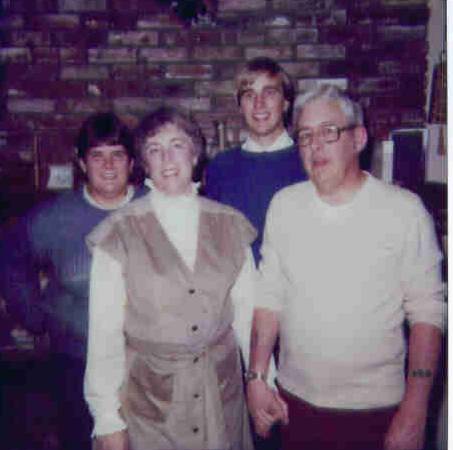
The photo above is my family. I think it was taken in the mid‑80s. By then, seeing Shelley smile had become more and more rare. I’m fairly sure she was sixteen and I was eighteen when this picture was taken.
Mom and Dad didn’t have a good marriage. Dad carried PTSD from his time as a Marine and struggled with alcoholism. Mom later identified herself as a codependent in that very dysfunctional relationship. She tried her best and was always present for us. Dad worked hard and provided for the family, but he also carried strong expectations for his kids. When I didn’t excel in athletics and chose not to pursue the military, it felt like the death of a dream he had for me. His attention shifted toward Shelley. He attempted to coach us in sports, but he wasn’t inspiring — more intimidating than anything.
We did have good times as a family. Dad worked for TWA, which meant we were able to take a lot of vacations. One memorable trip was to Phoenix, Arizona. We ate at a Mexican restaurant called Poncho’s, and Shelley had several tacos. The next day, as we drove through the desert heat with the car’s AC blasting, she kept ripping farts one after another, filling the car with a smell none of us could escape. We had to roll down the windows repeatedly. That’s how she earned the nickname “Poncho.” That story had a lot of traction over the years. She even learned to laugh at that memory.
As Shelley moved through her teen years, she learned to play the oboe and excelled at it. She also took piano lessons.
But somewhere in her upper teens, something shifted. I don’t know what caused it — rejection, something Dad said or did, something from school, or something entirely unknown — but she wasn’t happy. When she was younger, she used to write notes to Mom and Dad saying no one loved her. She knew she was adopted and I think hints of the abandonment wound from her birth family might have been hitting her. This idea of not feeling loved is something she struggled with. At the end of her life, I think she truly believed that.
Three weeks before she graduated high school, she attempted to take her life. She ingested a large amount of over‑the‑counter medication, mostly Tylenol. Some details have faded with time, but I remember that the same day she attempted, I was up at Northwest dealing with another suicide attempt. My friend Andy had also tried to take his life. The next day I was at the hospital in Maryville with friends and his family. I felt lost. I called home collect from a pay phone. If you don’t know what calling collect means, Google it. Mom answered, and I blurted out what had happened with Andy. She sounded different and told me to hold on. Later I learned that she and Dad were debating whether to tell me about Shelley’s attempt and decided to wait until after my finals.
Later that fall, I felt compelled to write to Shelley. My first to her. It ended up being an eight‑page letter. I addressed her suicide attempt and shared how I believed God could help her. As best as I could at the time, I shared the Gospel. I told her I loved her. I also made her a cassette tape of contemporary Christian music I hoped she might connect with.
Ironically, right after finishing the letter, my car battery died. Dad and Shelley drove up to Northwest to replace it — my mechanical skills were pretty nonexistent. I left the letter and tape in an envelope marked “For your eyes only.” Because of classes, I didn’t actually see them that day. Mom later told me Shelley must have read it. But she never talked to me about it. Never said thank you.
After she died, that letter was one of the few things she still had. She kept it all those years. I can only hope it did some good.
Who My Sister Was.
Let’s pause for a moment so I can share some of the qualities that made my sister who she was. Shelley may have struggled to feel loved by people, but she found unconditional love in animals. She adored dogs. They gave her what she often had trouble finding in human relationships. She had a dog named TJ, short for Tippy Jr. Tippy had been one of our earlier dogs, and Shelley connected deeply with him. Shortly before Tippy crossed the rainbow bridge, a friend surprised her with a brand‑new puppy. TJ had one of the sweetest souls you could imagine. After Shelley died, TJ spent his remaining years with my mom and my nephews.
Shelley also had a heart of gold and would do just about anything for anyone. She mowed people’s yards. She shoveled snow. During the last winter she was alive, we were driving to my Aunt Carol and Uncle Jim’s house for Christmas Eve — Mom and I in my car, Shelley, her husband, and the boys in her truck. Her marriage was on edge at this point. While we were on the interstate, she pulled off the road because a car had slid off the road. She got out, grabbed chains from her truck, hooked them up, and pulled the car out. The couple inside were newlyweds. That was my sister. She helped strangers. She even helped me move furniture into my new apartment.
After I graduated from Northwest Missouri State in 1989, we both lived at home for a couple of years. One summer she was housesitting for neighbors down the street. One night she called me — this was before cell phones, so everything was landlines — and she was frantic. She said she had trapped a massive spider under a trash can in the bathroom and one of its black legs was sticking out. I was heading to bed, but I went down to “save her life.” Sure enough, something black was sticking out. Shelley refused to come into the bathroom. I had to do my brotherly, knightly duty alone. I grabbed a rolled‑up newspaper and delivered the blow. What did I destroy? A terrifying spider? Not quite. It was a piece of black fishing wire. I can laugh about it now. Then, not so much.
She also made the best chocolate chip cookies. None better.
Despite our differences in religion, we didn’t talk about it much. She did have a spiritual side. She loved the show Touched By An Angel. After she died, I found two cassette tapes she had kept. One was from the band Poison with the song “Give Me Something to Believe In.” The other was a song called “Dear Mr. Jesus,” about a little girl writing to Jesus about the abuse happening in her life. The song broke into mainstream radio in 1987 and became one of the most requested songs of the year — unusual for a song that came out of a Christian ministry. Something about it spoke to Shelley. It was part of a search she had on finding that love that mattered.
It’s led me to wonder — and I have no proof — whether my father ever did anything to her, or whether someone else hurt her in ways she never shared. I don’t know. But she and Dad had a falling out a few years later, and she refused to invite him to her wedding. She never told me why. Here is a music video of the song she ordered.
When Time Broke in Half
Shelley had mental health struggles. She battled depression, her weight, and—especially as her marriage began to unravel—perhaps even her sense of identity. Some of this is speculation. It was never confirmed whether she had a bipolar disorder. As she moved into her twenties, our relationship became more surface‑level. We talked occasionally on the phone, but not with much depth. She once told Mom that she felt we were cursed in love. At one point, I might have believed her.
She met Kevin in the early 1990s while working as a stocker at a local grocery store. He gave her every line and bit of attention she had longed for. Many guys didn’t pay attention to her because of her weight. Kevin said all the right things. I wasn’t a fan of him though, pretty much from day 1 of meeting him. Even when we talked, I remember thinking he sounded a bit like a caveman. Low voice, kind of gruff. We did a few things together, but I don’t think we connected well. Eventually they moved in together, and one day I learned Shelley was pregnant. I had a week’s notice and was asked to be an usher and the sound guy at their wedding. Dad wasn’t invited. My grandfather—Mom’s dad—walked her down the aisle.
For a while, things seemed to be going okay. Shelley gave birth to her first son Luke in late September 1993. In 1995, on the exact day I started my job at UPS, her second son, Adam, was born.
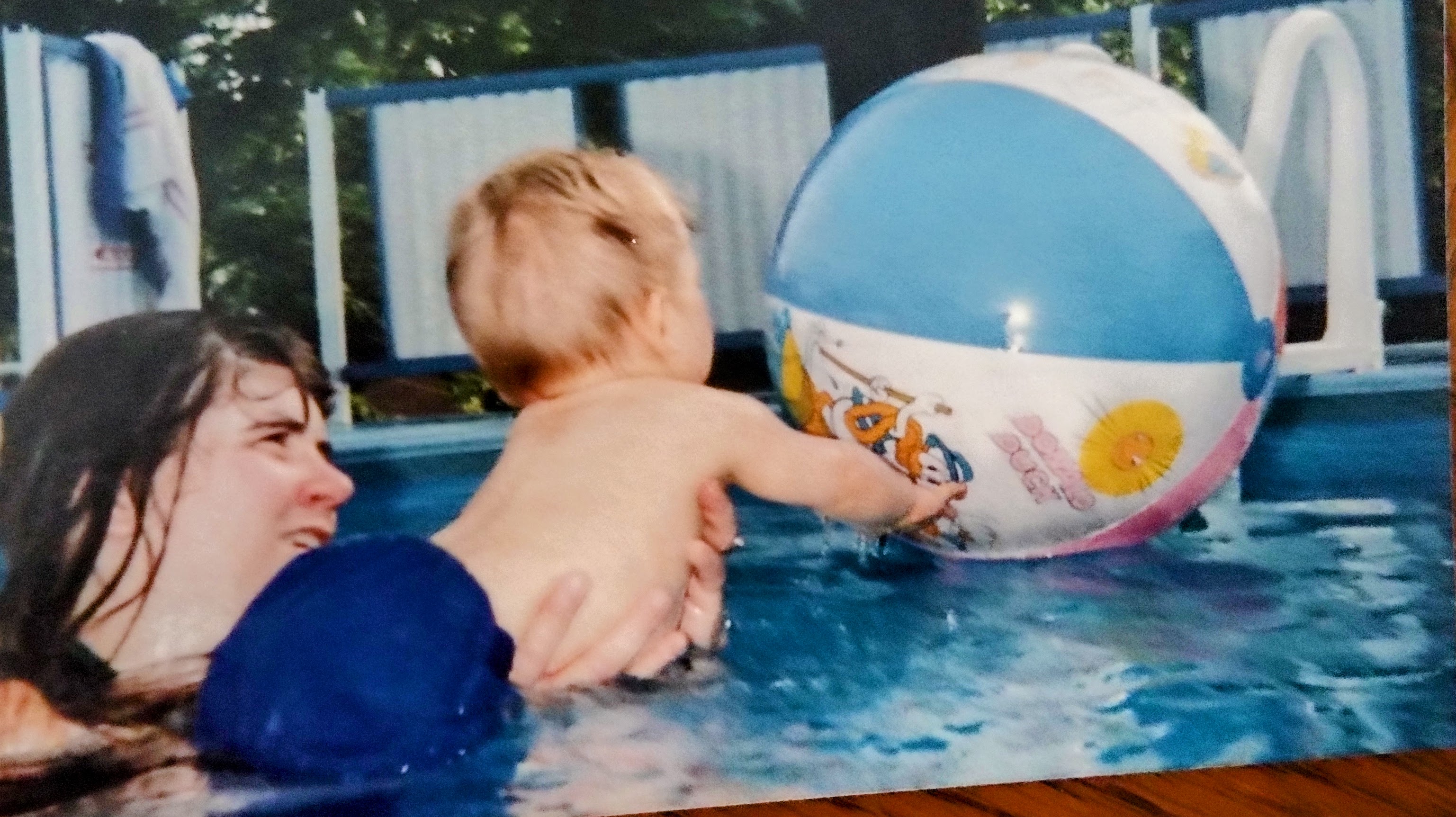
During that time, I was living with friends in Kansas City, and we had an above‑ground pool. One day, when Luke was still an infant, Shelley brought him over to swim. I was lucky to get the photo below. It’s one of the few times I saw her smile as an adult.
Even with two young kids, Shelley struggled. She worked during the day and Kevin worked nights, making it feel almost like a single‑parent existence. As their marriage began to deteriorate, she attempted again to take her life. It was always with pills. Because she was a big girl, it seemed every time her weight would save her. One night she was admitted to a psych hospital, and I went by their house to pick up some clothes for her. When I arrived and saw her, she didn’t say a word. Her expression was empty. I told her to fight. I told her to keep living.
In 1998, her marriage came crashing down. Mom and I tried to keep things normal for Luke and Adam when one or both of us visited. I heard from others about alleged abuse, and eventually they separated. Shelley moved back home with Mom, bringing the boys with her. It was difficult. She didn’t treat Mom well, and sometimes they collided emotionally. She tried again to get better and took a summer class through the University of Missouri — a course on social deviancy. She wasn’t familiar with the internet, so she asked me to meet her at the local library to help her search for resources online. When I asked what her paper was about, she simply said, “Teen suicide.”
My sister gave off clues that things were not good, but I didn’t follow up. I never asked why that topic. This was long before counseling became a career for me.
After that summer, she planned to move to Columbia, Missouri. She had housing lined up for herself and Adam. Luke stayed with Mom. I remember stopping by the house before she left. Shelley looked good. She had lost a decent amount of weight. But Columbia didn’t work out, and she came back home with Adam.
Five days before Shelley took her life, we had a small family birthday gathering for Luke’s fifth birthday. Kevin was there, and the tension was thick. The last time I saw my sister was Sunday, October 4th. I had taken the boys to church — they were involved in the kids’ ministry. Luke got sick, so I took them home early.
I saw Shelley downstairs in the basement. Her expression was flat. I told her Luke wasn’t feeling well. She was waiting for their dad to pick up the boys for the afternoon. She was wearing yellow sweats and a white T‑shirt. I told her I’d see her later and went back to church. She looked so miserable. The last time I saw her, I was more concerned about getting back to church than trying to talk with her.
That evening the Kansas City Chiefs played the Seattle Seahawks. Severe weather hit, and lightning paused the game for about an hour. I was at a singles party watching it. I left early because I needed to be up around 2:30 a.m. for my preload shift at UPS. At 1 a.m., I was sound asleep when I heard a knock at my door. It was a North Kansas City police officer. For a moment, I thought I was about to be arrested. He said that wasn’t the case and gave me a number for the Liberty Police Department, telling me I needed to call it.
After he left, I paused. I called Mom. She answered, and I asked if Shelley had come home. She hadn’t. The moment I told her I had just received a visit from the police, she began repeating, “Oh my, she’s dead, she’s dead.” Because Shelley had made previous attempts over the years, both Mom and I knew that if she truly intended to end her life, there was nothing we could do.
A neighbor stayed with the boys while they slept. At 2 a.m., I met Mom at the police department to speak with a detective. He slowly broke the news to us: Shelley had taken her life. She was alone in a friend’s yard during a torrential rainstorm. Somehow she had gotten hold of her friend’s husband’s pistol. She had bought bullets and apparently consumed a good amount of alcohol. Rain and wind were pelting her. Pills hadn’t done the job. I guess this was her final solution to escape the pain.
Aftermath…A New Normal
Right after we were told the news, my mom looked at me and asked where Shelley was. She meant spiritually. In that moment, I couldn’t answer. One verse came to mind — a verse that made Christian theology feel airtight and exclusive: John 14:6, “I am the way and the truth and the life. No one comes to the Father except through me.”
I had been solid in my faith, but this was the first time my relationship with God was truly shaken. Shelley never talked much about her beliefs. All I knew was that she had a spiritual side. I grappled with this for a long time.
October 5, 1998 was a blur. I spent most of it with Mom. We made the many calls to family and friends, telling them what had happened. A family friend came to stay the night with her. We told the boys only the barest truth — that their mom had been in an accident and didn’t recover. I teared up a bit. Years later, when they were older, we told them the full truth.
A couple of days later, Mom, my dad and his wife Kathy, and I met at the cemetery where my grandparents were buried. It was the first time Mom had met Kathy, and the first time all of us had been together since the divorce. As the funeral director rattled off costs for this and that, I started to get angry. I finally asked, “How much does it cost to breathe in this room?” We chose a simple graveside service.
Mom wanted her pastor to be part of the funeral, and since I had become the family spokesperson, she asked if I would contribute. I remember the night before — misting rain, very fall‑like weather — walking around North Kansas City trying to figure out what I was going to say.
It had rained heavily overnight but stopped shortly before the funeral. Shelley’s estranged husband was there with his mom. The boys placed roses next to her cremation box. The pastor gave a short message about Shelley. I gave a eulogy, sharing my memories of her and my belief — or at least my hope — that when she did this horrible thing, Jesus was right there saying He loved her and would take her. Granting her the unconditional love she had longed for. I said it to comfort others, but I struggled to believe it myself. I think it would have comforted my sister to know she had friends, and several of them were at the funeral.
For weeks afterward, the question of where Shelley would spend eternity plagued me. One Saturday, a wonderful woman from my church, Bobbie Maloney, called to see how I was doing. I told her I was having doubts. She reminded me of Romans 8:38–39 — that nothing can separate us from the love of God. It told me His love is deeper, wider, and more powerful than we can comprehend. So maybe God chooses to show mercy to those who are plagued with mental health issues and take this route. It’s not fully doctrinal theology, but what it said to me was that God has the final say. Not us.
Over the years, I’ve had vivid dreams about Shelley. At first they were about her being gone, or her telling me she needed to leave. Then, several years later, I had another dream — this time with a sense that she had been made whole. Restored. That she had found the unconditional love she had been searching for, and that our distant, surface relationship had been reconciled.
I don’t know if our loved ones speak to us in dreams. But even without concrete proof, I’m choosing to believe that Shelley is in a far better place today — and that I will see her again.
My parents called me the rock of the family during this time. I touch on this in the book, but I didn’t feel anything like that. Mom’s grief was muted because she had to focus on taking care of Luke and Adam. Dad had his wife, Kathy. I lived alone.
Thanksgiving was the first real holiday we had without Shelley. I went over to Mom’s house, and we planned to drive to Golden Corral for dinner — back when it was actually a pretty good place to eat. I sat out on the front porch by myself, looking at the other homes with families gathering together. Depressive thinking hit me, and I wondered if this was it. Was this the best it was going to be?
Before we left, I needed to get Adam changed. He was three, and he had a very large meltdown — screaming and crying for no clear reason. I now know it was his body reacting to the changes and the grief. He didn’t know how to communicate any of it except through a temper tantrum.
The day after Thanksgiving, I called my friend Tiffany from my singles group. I don’t know why I called her. But as soon as I started talking, the dam burst for the first time since this nightmare began. I cried, I heaved, I wailed, and I could barely get the words out: I missed her. There was some good moments of light in that season. We had some friends that were neighbors, the Minors invite mom, myself and Luke and Adam over for dinner just before Christmas. I wasn’t in the mood to go but went. I’m so I glad I did. Kay and Dudley Minor treated like royalty with a large dinner and showering each of us with gifts. I’ll never forget their kindness.
Christmas was hard but I got to experience something that I hadn’t to that point because I didn’t have kids. Mom went all out that Christmas and guess who to assemble some of those gifts. Me. When I was little, I always who put together the big gifts after Shelley and I would go bed. I was a rookie and it took to the wee hours of the night to get those wagons assembled. But it was a good moment. Those were just a few moments but as the new year started, I felt the world turn to a color I couldn’t shake.

My Season of Gray
As we slowly got through the holidays, I felt my life turning to gray. For six months, I got up, went to work, and struggled just to push through. I had never experienced this kind of grief. Some days my faith didn’t make sense. Friends were there for me, and I’m grateful for their consistency. I did see a counselor during that time. He helped, but as I’ve learned since becoming a counselor myself, not much can be said to reduce this gray. It’s simply something many of us have to walk through.
Six months I lived this life. Then one day, I was at a prayer meeting at church for the singles group I was in. We had been having some struggles, and someone suggested we pray together as a group. I remember asking God to help me let go of my grief — that I didn’t like what it was shaping and forming me into.
There was a girl I liked in the class. She never felt the same way about me, but she came in late to the meeting. After the praying ended, I got up and walked out without saying anything to anyone. I didn’t look at her. I didn’t look back. Symbolically, that was my way of moving through my grief and releasing those emotions. Slowly, my smile and my attitude started to come back.
Impact to Today
Mom raised the boys with little involvement from their father until they moved out. This story isn’t really about Luke and Adam — they’re private, and I want to respect that. I will say that today they are in committed relationships, both are working, and Luke is putting himself through college. Our relationship has had some interesting turns at times. I haven’t always been perfect as an uncle. Mom and the boys had their struggles, but today they have a close relationship with their grandmother.
Their dad passed away four or five years ago, and they walked through that season of losing both parents at a young age. I’m very proud of them — of the men they are and the men they are becoming.
I look back on my sister’s tormented life. Someone once said she had a tortured soul, and I agree with that. If she is looking down from Heaven, I think she is very proud of Luke and Adam. I’d like to think she is proud of my involvement in their lives as well. Part of what I’m doing today is because of her. I take suicidal thinking very seriously and want to be a positive and lasting impact in the lives of the people around me, both professionally and personally.
My sister never really got to experience life. Never got to dream big. I hope that wherever she is today, her spirit is soaring and living the grandest dreams possible.
Thank you for reading this. I’ve wanted to write about my sister for several years now, and I hope you’ve gotten a glimpse of her — of the awesome young woman she tried to be. If anyone reading this has been triggered by this story or is experiencing a mental health crisis, please reach out to someone you trust — a loved one, a friend, or a professional.
Until next time, may your journey lead into peace, love, and grace.


 Journey Into
Leave a comment