Part 1: When Love Listens — The L.U.V.E.S. Approach
by Michael French, MA, LPC
Next January marks my ten‑year anniversary as a Licensed Professional Counselor in Missouri. It’s a milestone I’m proud of, and I’m hoping a lot of meaningful things will unfold as that year begins. I’ll turn 60 — a reality I’m still not quite ready to embrace — we’ll finally take our long‑anticipated trip to Alaska, and I’ll be putting the finishing touches on my first book, Journey Into Grace.
But all of that is still ahead. In the meantime, I have ideas that aren’t part of the book but still feel important to write about here. This post comes out of the experiences I’ve gained since becoming a counselor and introduces a way of looking at listening in marriage that, to my knowledge, doesn’t exist anywhere else online.
As I developed this acronym, I searched to see if anyone else in the counseling or marriage‑communication field had created something similar. While there are models that use parts of these concepts — listening, understanding, validating, and empathizing — I haven’t found any framework that uses the full acronym L.U.V.E.S. or includes Safety as a core component. The structure, the order, and the emphasis on creating a safe emotional environment are unique to the approach I’ve built over years of working with couples. So while the individual ideas may feel familiar, the way they come together in L.U.V.E.S. is my own contribution to helping couples communicate more intentionally and more compassionately. These ideas are pretty basic yet some couples struggle to get the basics down.
The first time I presented L.U.V.E.S. to a couple was about six years ago. They were struggling, and the husband didn’t take our session well. When they left, he told his wife he was upset with me and swore he wasn’t coming back.
But something unexpected happened. Over lunch, his anger settled, and he began thinking about what I had shared. It sank in. It made sense. They returned the next week, and I ended up seeing them for five more sessions. Everything shifted, and they left feeling hopeful — and to my knowledge, they’re still doing well today.
And no, in case you’re wondering, the diaper brand LUVES has not paid me for cross‑marketing or endorsements.
If you’re ready, let’s take a deeper dive into what this acronym really means. In my work with couples, I’ve found that many struggle to do the very things L.U.V.E.S. invites us to practice — and when we do them, relationships often become much easier to navigate. On the whiteboard in my office, I write the acronym with one additional word in front of each letter: Seek. We are seeking to do each of these intentionally.
First up is the letter L, which stands for Listen.
Seek to Listen.
When our partner brings us something they want to share, most of us — if we’re honest — struggle to fully listen. We want to. We intend to. But we let other things get in the way. After a long day at work, we might not have much left in the listening tank to be fully effective and active listeners. We could be tired and not really in the listening mood. Sometimes we don’t want to hear the full story. We have short‑attention‑span theatre tuned in, and our ability becomes limited.
But let’s say for a moment that we are able to listen. There are a number of wonderful things that occur when we actually and fully listen. Author Bryant McGill had this to say about the power of listening:
“One of the sincerest forms of respect is actually listening to what another has to say.”
One moment with my wife that helped define the kind of listening she needed happened several years ago. I was in our bedroom, lying down and watching TV. She came in and asked if we could talk. She wanted to walk through something. I don’t know what came over me — because I’ve never asked her this before — but I remember asking what kind of listener she needed from me. Did she want me to staple the duct tape to my mouth and just let her process, or did she want my feedback?
She said she needed my thoughts, but wanted to get everything out without my commenting — which I’ve been known to do in the form of interruptions. That gave me clear instructions on what she wanted and how I needed to sit with her in what she was trying to work through. I remember that conversation going very well, and she felt fully seen and heard. Asking our spouse on how they want us to listen can go a long way.
Follow me for a moment and let’s look at the benefit of tuning in to what our spouse or partner is trying to share. When we fully listen, something else happens — and that leads us to the next letter, U. We want to Understand.
Seek to Understand
When we go into a conversation with the mission to understand, something opens up in us. Our listening arsenal becomes available. We can approach our partner with curiosity about what they’re bringing to us. We’re really seeking to understand their thoughts, feelings, and experiences. Even asking open‑ended questions or making simple statements like, “Tell me more about that,” helps us do this. I saw this quote recently that does a good job of summing up the power that understanding does in a relationship.
“To truly understand your spouse is to step out of your own reality and walk, even for a moment, within the complex landscape of their soul.” — Anonymous
When I strive to understand my wife, I gain insight and often learn something new. And that understanding allows me to do something very important — validate what she’s bringing to me. So V stands for Validate.
Seek to Validate
What’s the difference between Validate and the next part of LUVES, Empathy? Over the years, I’ve realized that validation comes more from the cognitive realm. It’s about giving credence and affirmation to our partner’s thought process and the ideas they’re sharing.
When we validate our partner, we’re acknowledging their take on things — the reasonableness and coherence of their thoughts, feelings, and experiences — even if we don’t agree with their interpretation of events. It’s a thought‑level acknowledgment that their feelings are legitimate.
And in the vein of listening well, we don’t have to agree. Validation simply means that in this moment, my thoughts and feelings don’t need to be on display — because I’m focused on my partner, not myself.
When we’re truly seeking to Understand, validation naturally shows up in the way we respond. It sounds like, “I can see why you’d feel that way,” or “That makes sense to me,” or even, “I’m here — keep going.” These kinds of statements don’t fix anything. They don’t offer solutions. They simply acknowledge our partner’s thoughts, feelings, and experience as legitimate. And when we do that, our partner feels seen instead of dismissed, understood instead of corrected.
Now let’s look at how empathizing is different from validating.
Seek to Empathize
A lot of couples can do the first three steps, even if they only do some of them well. It’s empathy that becomes the bigger struggle — and it’s usually more difficult for us men. Most men were not taught how to show empathy to their partner.
When you demonstrate empathy, you’re putting yourself in their shoes. You’re allowing an emotional connection to form and answering the question, “Can I emotionally connect with what my partner is feeling?” Empathy is stepping into their emotional world long enough to feel with them — not just understand them.
“Empathy is seeing with the eyes of another, listening with the ears of another, and feeling with the heart of another.” ―Alfred Adler
And when we can do this, it leads to one of the most important needs in a relationship, which wraps up our LUVES acronym with the letter S for Safety.
Seek to bring Safety
We want our spouses — and really anyone else who shares with us — to feel safe. That means having a sense of safety emotionally, physically, intellectually, and spiritually. I want my wife, and anyone who comes to me, to feel that sense of trust that they can bring whatever they need to. I want them to know they can lean on me in sharing and that I’m not going to do anything that jeopardizes that sense of safety.
As Ellen Boeder, MA, LPC on Gottman.com put it:
“Emotional safety enables us the freedom to collaborate, dream, be wildly creative, share bold ideas, feel increased compassion, and express ourselves freely with one another.”
Feeling safe in the relationship also brings about closer connection, and when we feel fully connected to our partner, problems become easier to deal with.
This is often one of the most difficult parts, because past experiences, relationships, and even trauma can make safety hard to feel. But when safety is present, everything else in the relationship becomes easier.
These ideas — listening, understanding, validating, empathizing, and creating safety — make up half the battle of communicating well. They’re the listening half. And if we did even half of these consistently, communication would be far more effective, and sometimes even victorious.
But… you knew there would be a “but.” We often fail to reach this high standard of listening for all kinds of reasons. I certainly haven’t batted .1000 in my attempts with my wife. Not even close. Now look at what happens when we basically do the exact opposite.
The Other Way…
If we seek to listen but only make it about halfway, it’s not because we’re lazy. Usually — and especially if you’re a man — there’s a part of the brain I call the Research and Development Lab that switches on the moment we’re given a percentage of information. We often don’t have the mental capacity to get the full scoop from our partner. I’ve found that men in general — and yes, there are exceptions — tend to want just the highlights. Give me the SportsCenter summary edition. Most guys would prefer the Reader’s Digest or Cliff Notes version.
The assumption is that men have been designed to be problem‑solvers, and we’re constantly scanning for an issue to fix. This isn’t new information. You’ve probably heard that on a lot of different platforms.
And this is where things start to go sideways.
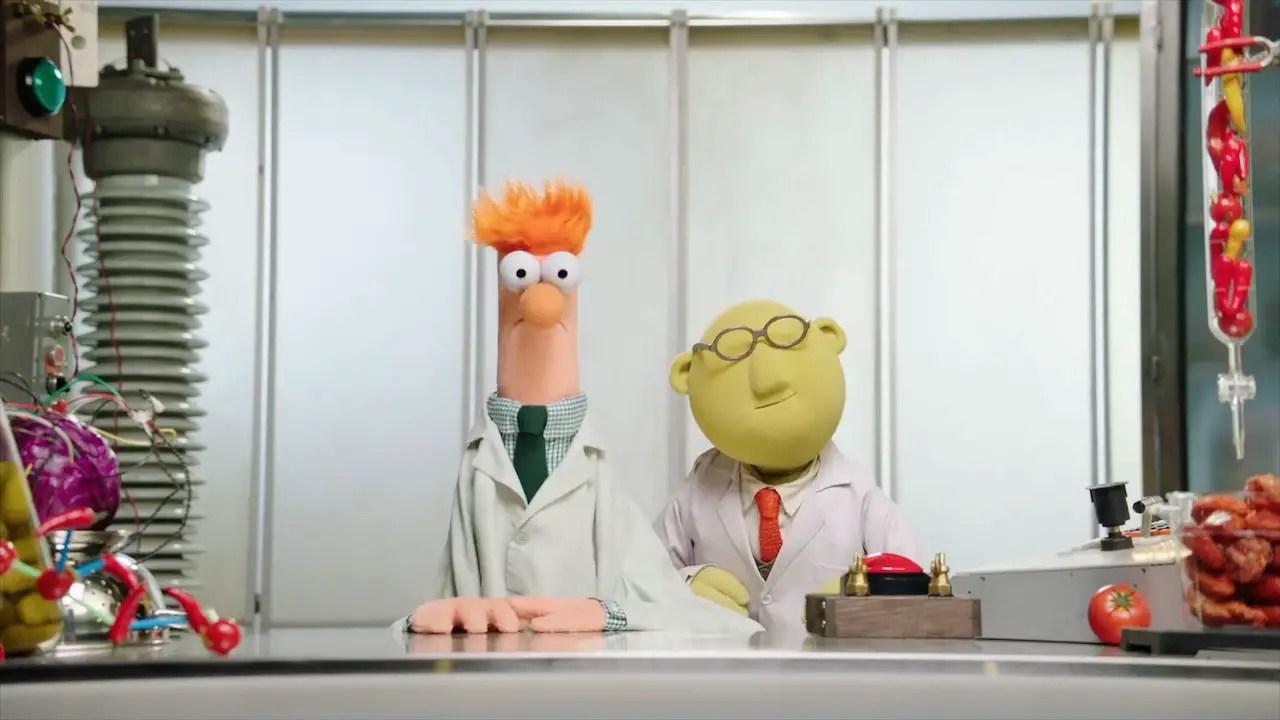
When I think about this “lab,” this place where our efforts are supposed to make our partners better, I get a very specific picture in my head. This is how I view the inner lab.
The Lab
Or Muppet Labs, to be more precise. Remember Beaker and Dr. Bunsen Honeydew? Sometimes I think they’re in charge of our efforts. Because at a certain point, we stop listening and the boys in the lab take over. They start rolling out proposals, schematics, blueprints — and they often show up coming out of our mouths in the form of questions, interruptions, or statements, all with the idea of informing our partner how their issue can be fixed.
Even though, a lot of the time, that’s not what they want. Often, they’re just looking to process and talk things out. And as you and I have experienced, they get frustrated when we don’t let them. We think we’re helping, but in reality, we’re not quite fixing. When that switch is made, it takes the attention off of our partner and onto us and how we’re going to save the world or our partner by giving our cues on how to fix. But we do something more than be very frustrating to our spouse. We transition from seeking to Understand to seeking now to be Understood.
Seek to be Understood
Now we are no longer listening to our spouse. We’re telling them — or giving sometimes unwanted advice — on how to deal with what they’re going through. Their thoughts, feelings, and experiences take a back seat to ours. It becomes about us, and in doing what we think is the “right thing” as men, we end up making it worse.
The desire to be understood can be helpful, but only if our partner asks for our feedback and thoughts. When we interrupt and start asking questions too soon, it can frustrate them and make them feel unheard. What does this look like? Here are some examples of what the lab might give us.
First, let’s look at questions we might ask:
“Well, why didn’t you just tell them no?”
“Did you try talking to your boss about it?”
“Have you thought about doing it this way?”
“Why are you letting that bother you so much?”
“What do you want me to do about it?”
Each of these questions might seem helpful, but they take the focus away from our partner’s experience and onto our lab — our own analysis.
Next let’s look at statements that have the potential to hijack the conversation:
“Here’s what you need to do…”
“Okay, I know how to solve this.”
“That’s easy — just stop worrying about it.”
“You’re overthinking it.”
“If you’d just do what I suggested last time, this wouldn’t happen.”
These statements shift the spotlight from our partner’s thoughts and feelings to our solution.
Now let’s look at some examples of how interruptions can derail listening. This is when Beaker hits the panic button:
“Hold on, hold on — back up. Why did you say that?”
“Wait, that doesn’t make sense.”
“But that’s not what happened last time.”
“Okay, but listen…”
“I don’t think that’s the real issue.”
When we interrupt like this, the message becomes, “My thoughts matter more than your experience.” We never intend that, but when these things come out of our mouths, that’s often the message that gets communicated.
Validating Me.
I really feel that when we discount what our partner brings to us in these moments — while we’re offering our version of “fixing” — we’re no longer showing validation. We’re actually validating ourselves: our attempts, our thoughts, and our feelings about the matter. I’ve done this without realizing it at times.
And when we do that, it can make our partner feel less than. It can make them feel like what they’re sharing isn’t important, or that their experience doesn’t carry the same weight as our solution.
Invalidation also communicates to our partner that we might minimize, dismiss, or ignore their thoughts, feelings, and experiences. On the website Neurolaunch.com, they note that invalidation hurts. They write:
“In the long term, it restructures the relationship. The partner being invalidated stops bringing difficult feelings to their spouse, not because they’ve stopped having them, but because experience has taught them it isn’t safe. That’s not growth. That’s retreat.”
If we are not fully listening, not understanding and invalidating, where does that leave Empathy?
Empathy Breakdown
If we aren’t doing any of the above, then it becomes very difficult to show empathy. I’ve sat with men who tell me that demonstrating empathy feels downright hard — and sometimes even scary. Women often find themselves attached to men who don’t connect emotionally. Some of the reasons given are that men don’t grasp their partner’s emotional vocabulary, or they lack the emotional intelligence to show up in that way. Other reasons might include their upbringing and that they were not modeled how to show empathy.
Although less common, I’ve also observed situations where women struggle to show empathy for their partner. Jennifer Luttman, LPC, ACS writes on Overcomewithus.com that real damage occurs when there is a perceived lack of empathy:
“The effects of a perceived lack of empathy on self-esteem and mental health can be significant. When your feelings are consistently dismissed or misunderstood, it can lead to doubts about your emotional responses. You might start questioning whether your reactions are valid or whether you’re being too sensitive. This can slowly chip away at your self-esteem, making you feel less confident in expressing your emotions. Moreover, feeling emotionally unsupported can also contribute to mental health issues like anxiety and depression.”
And this leads us to the last letter in our acronym: Safety. Except this time, there is no sense of safety.
Safe No More
If we don’t create an attitude and atmosphere of listening, understanding, validating, and empathizing, our relationship can begin to shut down toward us. Our partner stops coming to us with the heavy topics. Instead, they may start turning to others outside the relationship — not because they want to, but because experience has taught them it isn’t safe to bring those things to us.
Some spouses have told me that talking to their partner feels like walking on eggshells. They don’t know which version of their spouse they’re going to get, so they avoid difficult conversations altogether. When that happens, safety disappears.
John Gottman puts it this way:
“A healthy relationship is one where both partners feel safe to express their true selves without fear of judgment or rejection from their loved one.”
Feeling unsafe also creates disconnection. Feeling close becomes hard. Distance grows. And if partners don’t deal with these things, the relationship slowly shifts from openness to avoidance, from connection to retreat.
It’s Not Hopeless
Honestly, none of us will get these aspects of listening right all the time. We all have moments where Dr. Honeydew and Beaker try to take over. I know I do. But if we want our spouse to feel fully seen and heard — if we want them to feel validated and safe in future conversations — then these are areas we simply have to work on. And it takes practice. Practice, practice, and more practicing to get better.
The good news is that our relationships are remarkably resilient when we turn back toward one another. When we slow down, listen again, and work this back‑and‑forth of becoming incredible listeners for each other, something begins to shift. The eggshells start to disappear. The distance gets smaller. Trust begins to rebuild.
Not perfectly. Not instantly. But steadily.
Safety isn’t built in one moment. It’s built in a thousand small ones — the moments where we choose to listen instead of fix, understand instead of defend, validate instead of dismiss, empathize instead of retreat.
So when you catch yourself drifting into the lab, or slipping into fix‑it mode, don’t beat yourself up. Just turn back. Seek to Understand before you seek to be Understood.
That’s how connection grows. That’s how safety returns. And that’s how love moves forward.
Next time, we’ll look at the other half of communication. How we talk to each other. Until then may your journey lead into peace, love, and grace.



Leave a comment