When Recovery Feels Like a War
By Michael French, MA, LPC
Hello and welcome back. We’re halfway through November. My last post was on war, particularly my intersection with both actual war and spiritual warfare. Today we’re looking at a different kind of war. Yet many of us find ourselves in this battle every day. It’s the war of recovery.
Each day we choose how we will fight this battle. Do we step into our recovery story with perseverance and courage, or do we retreat into familiar patterns and habits that keep us stuck? I have done both. Recovery requires us to keep moving forward even when progress feels slow and the path feels difficult.
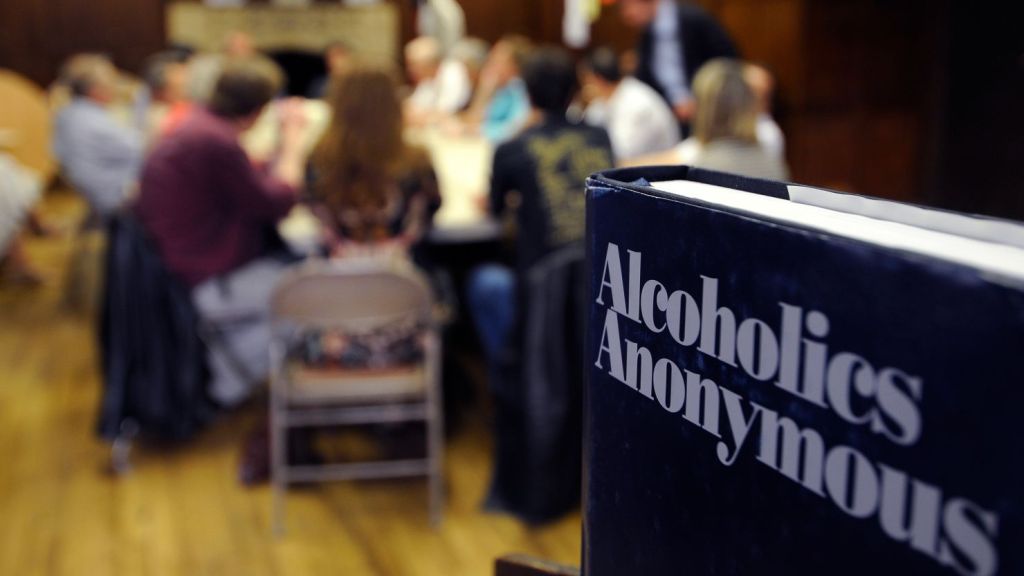
The other day I was invited by someone I have worked with to hear their story at an open Alcoholics Anonymous meeting. He was celebrating twenty-six years of sobriety. This particular group was holding a special evening called SNL that included people from both AA and Al-Anon. I estimated that more than thirty-five people attended, each carrying a unique story of struggle, loss, hope, and transformation.
I have shared before that my father was an alcoholic. Over the years I attended Adult Children of Alcoholics and even participated a time or two in an Al-Anon or Ala-Teen meeting. Yet I had never experienced a gathering quite like this one.
Three Stories
As the meeting began and the group worked through their familiar opening rituals, including the reading of the Twelve Steps, I experienced an unexpected sensation. It was hope.
Hope filled the room as people arrived, greetings were shared, and hugs were given. Smiles were everywhere. I have been on my own recovery journey for many years, and at times I have felt discouraged in my efforts. Yet something was different that night. As I listened to the stories of others and heard how they had found hope amid their struggles, I felt my own spirit lifted. I may have come to hear a story, but I left with so much more.
That night I heard stories from three different people.
The first speaker had only a couple of years of sobriety. Growing up as an adoptee in a family whose racial background differed from their own, they wrestled with questions of identity for much of their life. Along the way they battled addiction and experienced losses that would have crushed many people. Yet rather than speaking with bitterness, they spoke with gratitude. Recovery had given them a new way of living and a new way of understanding their story. Instead of being defined by their wounds, they were learning how to be shaped by hope.
The second person celebrated thirty years of involvement in Al-Anon. Their recovery journey was different, yet many of the themes sounded familiar. They spoke about finding a family within the group and learning the difficult but necessary lesson of focusing on their own growth rather than trying to change someone else’s behavior. Recovery, for them, involved discovering healthier ways of living, healthier boundaries, and healthier ways of relating to others.
Then there was the person I had come to hear. While he was celebrating twenty-six years of sobriety, his story focused on more than abstaining from alcohol. He spoke about the impact his addiction had on his wife and children and the long process of rebuilding trust and repairing relationships. I heard pieces of his story that I had never heard before.
Then he surprised me.
At one point he mentioned me by name and spoke about the role that others had played in supporting his recovery. He talked about the people who challenged him, encouraged him, and refused to let him settle for excuses. Those relationships helped him begin a process of transformation and growth that continues today.
I left that evening deeply impressed by all three stories. While each journey was unique, they shared a common thread. None of these individuals spoke as though recovery had been easy. They spoke honestly about setbacks, pain, loss, and struggle. They talked about the war they fought. Yet they also spoke about gratitude, growth, and hope.
That combination struck me. Recovery is hard. Sometimes painfully hard. Yet the possibility of change makes the struggle worthwhile.
I have been promoting an upcoming interview with my daughter, and that project remains ongoing. Until then, I thought I would share a few reflections that emerged from this experience. Today’s reflection is about recovery, what it means, and how we pursue it.
The longer I sat with what I had heard in the meeting, the more I became convinced that many of us are in recovery of some kind. Some people battle addiction. Others wrestle with anxiety, depression, grief, negative thought patterns, broken relationships, or wounds from the past. While our battles may look different, we are all trying to move from where we are toward something healthier, stronger, and more whole.
My Recovery Story
Each of us has a story to tell. The other night, I heard three of them.
When I first considered becoming a Licensed Professional Counselor, I dreamed of someday opening my own practice. I had even come up with a name: Testament Counseling. While life has not followed the exact path I originally envisioned, I still love the idea behind that name. A testament is a story.
So here is part of mine.
Recovery for me has meant learning not to quit. It does not mean I have not failed. In fact, there have been moments throughout my recovery journey when I have stumbled. At times, that stumbling occurred quite often.
Throughout much of my life, the most visible struggle has been dealing with lust. I share more about that journey in my upcoming book. At times, that has been the war at the forefront of my mind. Over the years, I have learned coping skills, accountability practices, and spiritual disciplines that help me walk in victory and sobriety. When I stay committed to those practices, I find strength and freedom.
Yet there have also been seasons when I struggled and found myself returning to familiar patterns. Those moments have been humbling reminders that recovery is not a destination we arrive at, but a journey we continue. It’s a journey I’m on until I breathe my last.
What I have come to realize, however, is that lust was never the whole battle. It was often the most visible battle, but not the deepest one.
There have been other fronts in this war that had little to do with lust itself. If I am honest, some of those deeper battles helped fuel that struggle in the first place.
One of those battles has been dealing with feelings of inadequacy, invalidation and believing that I somehow lacked what others seemed to possess. Depression entered the picture at various times, particularly after I began working as a counselor. More recently, I came to recognize that anxiety has also been part of my story.
For years, I did not think anxiety was a significant issue for me. Yet as I continued doing my own work, I began to recognize patterns of overthinking, worry, and feeling overwhelmed.
I have experienced what I call depressive attacks. Often, I can sense them coming. They are like an ocean wave seen in the distance, moving steadily toward shore. At first, it seems manageable. Then the wave arrives with far more force than expected. Along with it comes a heaviness in my thinking and a pressure that I often feel in the back of my head, where I carry much of my tension.
When these moments occur, my thoughts can begin spiraling downward. Everything feels heavier than it actually is. Problems appear larger. Hope feels more distant. On the surface, I may still be functioning, but internally it can feel as though I am fighting to regain my footing.
Other times, anxiety looks like carrying burdens I was never meant to carry alone. Sometimes that weight keeps me stuck.
When those moments hit, they usually do not last long. Yet they often emerge when anxiety, stress, and overthinking begin feeding one another. They also emerge when I feel worn down by the pressures of carrying what others bring into the counseling room. I am grateful that I have found practices such as mindfulness that help me regain my footing. I also lean on the prayers of others and bring those concerns before God myself. I am carried by the promises of Scripture and reminded that these difficult moments are temporary. As the old saying goes, “This too shall pass.”
Scripture repeatedly reminds us that we are not meant to carry our burdens alone.
1 Peter 5:7 “Cast all your anxiety on Him because He cares for you.”
Peter’s words remind us that we release our worries into God’s hands because we are deeply cared for by Him.
Psalm 55:22 “Cast your burden on the Lord, and He will sustain you; He will never permit the righteous to be moved.”
Peter appears to echo the truth found in this psalm. Both passages remind us that God invites us to bring Him our fears, worries, anxieties, and burdens. Recovery is not simply about trying harder. It is learning, over and over again, to surrender what we were never meant to carry by ourselves.
While anxiety is one burden I have learned to surrender, it is not the only one.
Another area of recovery for me has been healing from the effects of shame.
In my last article, Journey Into War, I shared about my experience at the Survival School Men’s Retreat. During one exercise, we were asked to consider an area of our lives where we wanted Jesus to meet us. For the longest time, nothing came to mind. Then an image slowly began to take shape.
I found myself looking at a field.
It was barren. Mostly dirt. Very little plant life existed anywhere. In the center of the field was a deep hole. From that hole oozed a thick black sludge, almost like crude oil. It slowly spread across the ground, darkening everything it touched. It wasn’t consuming the entire field, but something seemed to be preventing it from dissipating. I asked AI to create an image as I described it. It’s pretty close.

As I sat with that image, I sensed God was showing me how shame has often operated in my life. Looking at how the blackness spreads across the field, I am reminded that shame rarely stays contained. It spills into our thoughts, our relationships, our emotions, our faith, and the way we see ourselves. I look at that hole and think about the messages that darkness has whispered to me over the years.
I have always been my own harshest critic. Over the years, I have wrestled with thoughts tinged with regret, disappointment, and condemnation. What is interesting is that these thoughts often begin in the second person.
“You’re a fraud.”
“You’ll never get better.”
“You’re never going to change.”
If I listen to those thoughts long enough, they eventually become first person.
“I’m a fraud.”
“I’ll never get better.”
“I’m never going to change.”
Many of these thoughts tie into my struggle with impostor syndrome. Isn’t it amazing how much power those thoughts can have over us?
Most of us become experts at hiding them. We put on a mask and appear to function normally. We go to work. We attend church. We smile. We carry on conversations. Yet beneath the surface, shame continues to ooze into areas of our lives much like that black sludge in the field.
This is part of the hard work of recovery.
Every time I stumble, every time I replay an old failure, every time I become overly critical of myself or others, shame attempts to reinforce its message. It wants me to believe that my mistakes define me. It wants me to believe that I am the sum of my failures rather than a person being transformed by grace.
I have shared this in previous articles, but when I stop looking at these flaws through the lens of shame, I begin to see them differently. Rather than seeing defects that define me, I come to see wounds that need healing. I begin to wonder if that is how God sees them as well.
Have you ever experienced that?
Time to go on the Offensive.
The work of reclaiming what we have lost and defeating shame is relentless. Painful. At times it can feel like the fight of our lives. Yet when we begin to see our struggles as wounds rather than verdicts, we can finally begin treating them.
When I was a kid and came home with a cut or scraped knee, my mom always reached for the Bactine. I certainly preferred that to hydrogen peroxide. The bubbling, stinging sensation of peroxide was not how I wanted to experience healing.
Yet wounds require treatment if they are going to heal.
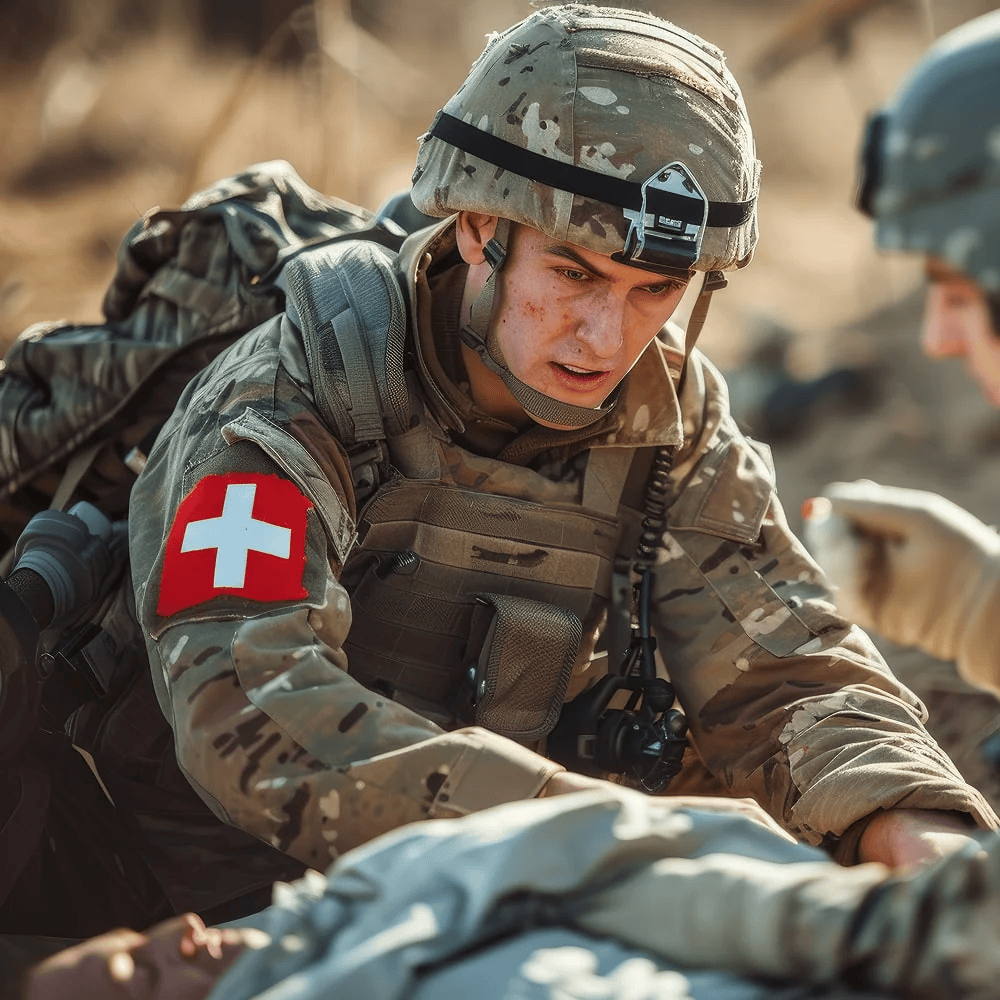
In combat, when a medic encounters an injured soldier, their first priority is not getting the soldier back into the fight. Their first priority is stabilizing the wound. The bleeding has to stop. If left untreated, the injury will continue causing damage.
While watching the World War II miniseries Band of Brothers recently, I noticed the medics often applied a powder to severe wounds. Curious, I learned that these hemostatic agents are designed to quickly stop bleeding so a wounded soldier can survive long enough to receive further care.
Recovery often works in much the same way.
Before we can move forward, we often have to address the wounds that continue to bleed beneath the surface. Shame, anxiety, grief, bitterness, rejection, and unresolved hurts have a way of draining us over time. Ignoring them rarely works. Pretending they aren’t there doesn’t heal them. We must first acknowledge the wound before healing can begin. We have to step out of denial and admit that our behaviors and acting out often are the results of the wound not being dealt with.
When I sit with clients and hear their stories, they can often tell me about the acting-out behaviors. They can usually identify some of the emotions, memories, and thoughts that exist near the surface. Going deeper, however, can be difficult.
Years ago, while attending graduate school, I worked for the Division of Children Services in Kansas City. I served as a community mentor at an alternative school for juvenile offenders. Many of the students had committed serious crimes and were given an opportunity to earn their GED, learn life skills, and receive support that might help them build a different future.
I only worked there for six months, but one lesson has stayed with me all these years.
Pain often keeps us from looking at our wounds.
Many of the students I worked with cursed constantly and showed little respect for the adults around them. At first glance, it was easy to focus on the behavior. But the school’s director, Frank Gray, one of the wisest men I have ever known, helped me see something deeper.
For many of these young people, pain was unpredictable. Vulnerability felt dangerous. Looking at their wounds felt overwhelming. Toughness became a form of protection. The profanity, the attitude, and the posturing often served as armor that kept others from seeing how much they were hurting underneath.
Over the years, I have realized that adults are not much different.
The details may change, but many of us become experts at avoiding our wounds. We stay busy. We numb ourselves. We distract ourselves. We blame others. We act out in unhealthy ways. Anything to avoid looking too closely at the places where we hurt.
Yet recovery invites us to do the very thing we most want to avoid.
It invites us to look at the wound.
I felt invited into this process when I first started meeting with a counselor. Over the years, I have had a few counselors who helped point me in the right direction, providing resources and tools that aided my recovery and helped me examine and release some of the burdens I had been carrying.
Looking back, the support groups I have participated in also played an important role in helping me understand my wounds. Adult Children of Alcoholics, Liontamers Anonymous, M.A.S.K. (Men Addicted to Sexual Controls), and Celebrate Recovery provided safe places where I could be honest about my struggles and find support from others walking similar paths. Today, I remain involved in Celebrate Recovery and continue to walk alongside others on this journey.
My relationship with God has also been an anchor when I need to stop and stay grounded. He then becomes my fortress during the storm.
“My salvation and my honor depend on God; he is my mighty rock, my refuge. Trust in him at all times, you people; pour out your hearts to him, for God is our refuge.” – Psalms 62:7-8
That relationship has also given me a sail with a wind when I needed to get up and start moving. I am strengthened by His faithfulness toward me and His desire to see me find freedom from what has held me captive.
“In the same way, the Spirit helps us in our weakness. We do not know what we ought to pray for, but the Spirit himself intercedes for us through wordless groans.” – Romans 8:26
I have shared part of my story with you in the hope that it encourages those who may be struggling to identify and address their own wounds. If you are facing something that feels overwhelming or debilitating, please know that you are not alone. I encourage you to consider reaching out to a counselor, pastor, mentor, recovery group, or trusted friend who can walk alongside you.
My recovery journey has been far from perfect. There have been victories and setbacks. There have been moments of freedom and moments when old struggles resurfaced. Yet I have learned that recovery is not about never falling. It is about refusing to quit. I have heard this quote and there are variations of it but this speaks to me.
“The measure of a man is not how many times he falls, but how many times he rises after falling.“
General George S. Patton said it this way: “A man is not measured by how much he can take and stand but by how fast he regains once fallen.”
And then there is that scene from the film Rocky Balboa and Rocky himself gives his son a great motivational speech about taking the hits. Check it out.
Perhaps that is why recovery sometimes feels like a war.
Each day presents choices. Will I move toward healing or continue hiding? Will I face my wounds or pretend they do not exist? Will I challenge the lies I believe about myself, or allow them to remain unchallenged?
The people I listened to at that AA meeting all shared different stories. Some had been walking their recovery journey for a few years. Others for decades. Yet they all had something in common: they kept showing up. They kept doing the work. They kept fighting for the life they wanted rather than surrendering to the life they once had.
That night I came expecting to hear one person’s story.
Instead, I left with hope.
If you feel like you need support in finding resources to assist you in your own journey of recovery and healing, feel free to reply to this post. I’ll do my best to point you toward resources that may be helpful.
Thanks for reading. Until next time, may your journey lead you into peace, love, and grace.


Leave a Reply