This is Part 2 of The Masculine Wound Trilogy — a three-part series exploring masculine identity and healing.
- Part 1: Journey Into Masculine Vulnerability
- Part 2: Journey Into Reflections on My Father (you are here)
- Part 3: Journey Into The Father Wound
By Michael French, MA, LPC
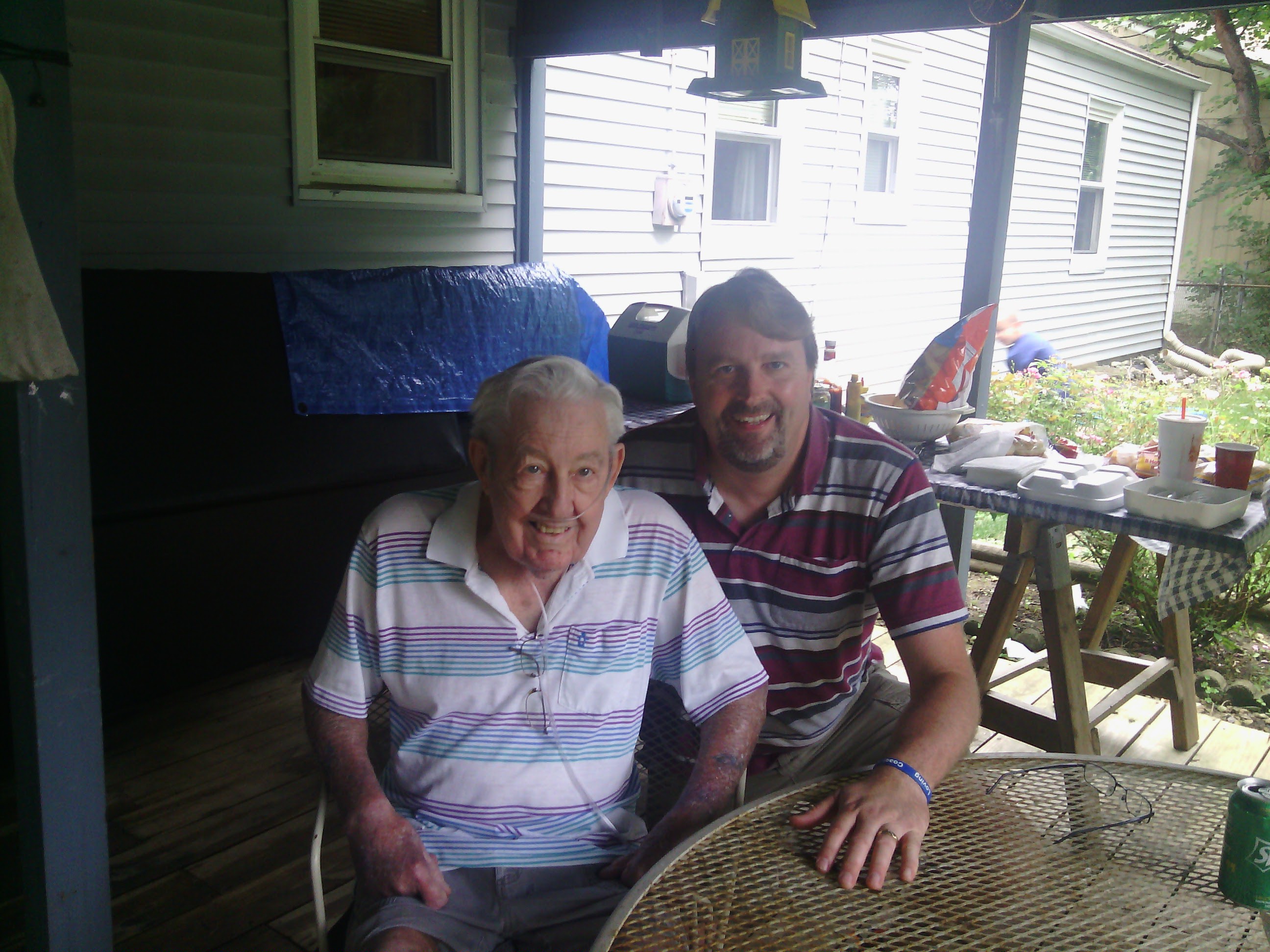
Ten years ago, my dad passed away from complications of COPD and emphysema. Decades of heavy smoking and drinking finally caught up to him. His last several years were spent mostly as a recluse, rarely leaving the house except for medical appointments. A couple of years before he died, he suffered a stroke that led to months of rehab. He nearly died from it, but surprisingly, his mind wasn’t impacted as much as we feared. He also lived with a form of dementia that caused him to worry excessively about things.
Below is the last photo I have of the two of us together, taken at his 80th birthday party. This was about a year before he died.
I’ve been thinking about him recently. As I keep working on Journey Into Grace for publication, I realize many of the beats in the book only offer snapshots. Because the book also incorporates photography, I couldn’t go into massive detail or it would have turned into a 300‑page volume — and I’m not sure how many people could afford to buy it. I mention my father in the book, but I don’t go deep.
This “remastered” edition of a piece I published on my blog over nine years ago goes into greater detail. Even though my dad has been gone for several years, his life still impacts me today. Back when I wrote my original thoughts about him, I hadn’t fully dealt with the father wound or the inner‑child wound. The last couple of years have brought a lot of healing to those places, especially around how those wounds circled around dad and I.
I hope you enjoy this and maybe catch a glimpse of your own story in it. Did you struggle with an emotionally distant father? What has been the most telling part of that wound for you? My father was very flawed, but over the years I’ve found full grace and forgiveness for him. There is no more resentment.
A look back.
Ten years have passed since my dad died, and I find myself looking back on him differently than I did in 2016. Back then, everything felt close and sharp. I was only a few months into grief, still trying to make sense of the man he was and the relationship we had. Now, with more time behind me, I can see him with a steadier heart. Not perfect, not terrible — just human. A man shaped by his own wounds, doing the best he could with what he had.
In September 2016, my wife and I were foster parents, and I was in the middle of my internship with KVC Health Systems, the agency handling foster care in Kansas at the time. Since I was already interning there, they asked me to lead a group class called Championship Fathering, based on the book by Carey Casey. I worked with dads who had children in foster care. In the book, Carey talked about two concepts: heritage and legacy. Heritage is what we receive from our fathers — the values, beliefs, and messages their lives communicate. Legacy is what we leave behind for our own families. The two are linked. One person’s heritage is shaped by another person’s legacy.
Those ideas shaped how I saw my dad. We had a challenging relationship, and much of his behavior was influenced by the heritage he received from his own family.
George Edward French was born in June 1935 in Springfield, Illinois. He didn’t talk much about his childhood, but the pieces I do know explain a lot. The only picture I have of him as a boy is when he was about five, shoveling snow. I’ve often wondered what was happening in his life at the moment that photo was taken. His life changed forever when his father left when he was eight. He told me later that he never saw him again. His mother struggled emotionally, and some family members believed she suffered from mental illness. Eventually, he and his sister were sent to a boarding school because she couldn’t care for them. He never openly shared about that chapter of his life.
Later, he lived with his Aunt Betty and Uncle Dunc in Virginia. Only recently did I learn that his uncle had been part of the Ku Klux Klan decades earlier. My dad absorbed those views, not because he was naturally hateful, but because that was the world he grew up in. His bigoted views didn’t change. He never found a way out of them.
He joined the Marines as a young man and fought in Korea. He carried scars from being shot in the stomach — literal reminders of a war he rarely talked about. Trauma didn’t have a name then, but he lived with it every day. Looking back now, I can see how much of his adult life was shaped by those early wounds: abandonment, instability, prejudice, and the kind of emotional silence that becomes a survival skill.
My parents married in 1960 and later adopted me in 1967 and my sister Shelley in 1969. I remember good moments from childhood, but I also remember the drinking. Dad was a functional alcoholic. He showed up at work, but at home he drifted. It was amazing — he could drink a 12‑pack of beer a night and still go to work the next day. He was a terrible husband to my mom, and it showed in their arguments. I played the role of peacemaker, trying to shut down the heated fights. It rarely worked, and today I’m not a fan of confrontation.
He tried sobriety once when I was in high school, checking himself into a three‑week program. Dad was prideful and, like many men, didn’t want to admit when he had failed at something. So telling us that we had convinced him he needed help was his way of admitting he was an alcoholic without actually saying the words. He stayed sober for two years. I was proud of him. When I left for college, he relapsed. That pattern — trying, slipping, trying again — was part of our story.
He loved me, but emotional presence wasn’t something he knew how to offer. When my sister Shelley committed suicide in 1998, he called to check on me but never shared his own grief. I don’t think he knew how. He had remarried by then, and his wife Kathy told me he cried buckets those first few days. Shelley and he had been estranged for a few years. When she got married, she refused to invite him. I never found out why. They seemed to reconcile a couple of years before her passing. I wonder if his tears were a reflection of guilt and shame — knowing he didn’t really do a great job as a dad to her.
At various seasons in life, Dad tried to connect in small ways. During my years at Northwest Missouri State, he wrote me letters — two or three a month. Stories from work. Jury duty. Thoughts about the Challenger explosion. Those letters were his version of connection, and I treasure them. One year, he bought me tickets to a local science fiction convention where I met David Prowse, the actor who played Darth Vader. That was pretty cool.
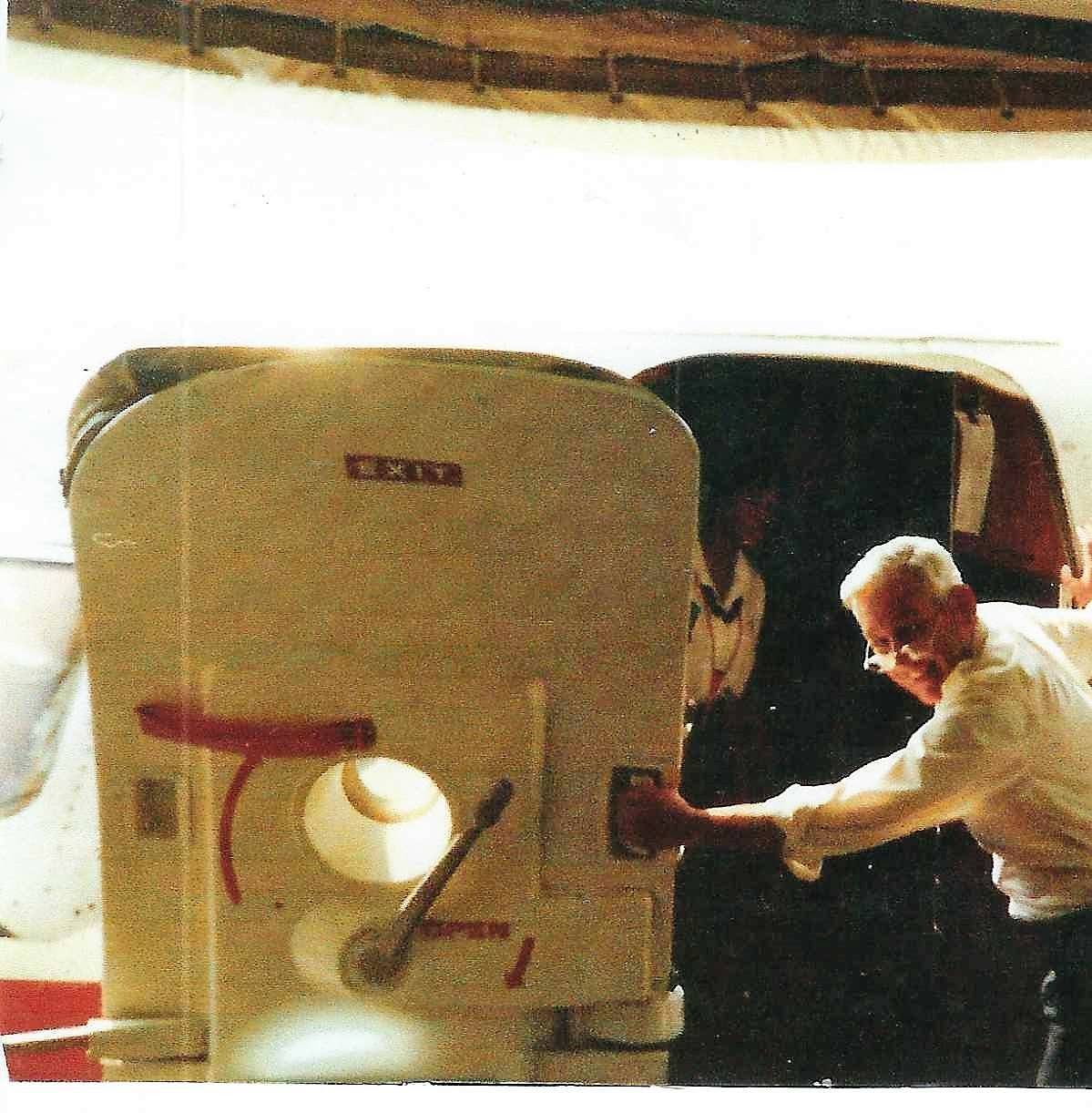
Dad worked for TWA from 1957 until the mid‑1990s. His coworkers were his family. He was old‑school, opinionated, sometimes crude, always ready with a joke. He typed with two fingers and still helped people learn new systems. Some of my favorite stories were when he met celebrities flying into Kansas City. He escorted Farrah Fawcett off a plane once. He met Howard Hughes. He brought home autographs from Jacques Cousteau and John Glenn. He used to run the Kansas City Royals flights and knew some of the players by name. Work was the place where he felt competent, respected, and understood. Leaving TWA was hard on him. I think a part of him faded when he retired from the airline he loved. Dad was a ticket agent and he loved being part of this airline. Below is a photo of him closing his final flight on his last day at work.
Faith, Anger, and Forgiveness
Spiritually, we never quite connected. Dad considered himself a non‑practicing Catholic. I became a Christian in 1979, and it created a divide neither of us knew how to bridge. He didn’t understand the relational aspect of faith. But he surprised me once: I found a copy of the end‑times novel Left Behind in his bathroom and assumed Kathy was reading it. He told me he loved the book. That was a jaw‑dropping moment for me. It opened small conversations about world events and Scripture. It wasn’t much, but it was something. Everytime a new book in the series came out, I’d let him borrow my copy. He enjoyed having conversations about the book with me. When he had the stroke, during that time, his wife relayed to me that he met with a priest a few times. I don’t know where his faith landed. That’s in God’s hands now.
A couple years after my parents divorced, Dad invited my sister and me to Thanksgiving with Kathy’s family. I watched him read a book to one of her grandchildren, and anger rose in me. It wasn’t about the book. It was about everything underneath it. I never recalled him reading to me. I became angry that he had mostly failed as a dad and husband in my family and now had this second chance wtih this new family I barely connected with. It seemed unfair. A coworker noticed something was wrong. I shared my anger with her, and she encouraged me to forgive him before resentment took root.
Just two days later, Dad called and asked to talk. He thought I didn’t like his fiancée. Instead, I told him I was angry with him — for a lot of things. The past, the way he treated Mom, and how he treated Shelley and me when we were younger. But God was moving. I forgave him. It didn’t fix everything, but it freed me. It opened a door. That was the first time I forgave him. A couple more moments of forgiveness were to come.
As he grew older, Dad became more pessimistic. He complained about people, world events, and the Chicago Cubs missing the postseason again. He would have loved to see them win the World Series in 2016. But even with his negativity, he wasn’t all gloom. He loved Kathy deeply. He adored his dog Bandit. And he lit up around his great‑grandson Cameron. Those relationships softened him in ways I didn’t always see at the time.
I wish we had been closer. I wish our expectations of each other had been met. Last year, when I was seeing my counselor, I told her about my phone calls with Dad. They seemed to cover the same territory. When I tried to share things from my life, he interrupted a lot, and I felt he wasn’t fully listening. My counselor gave me a look and said that even though the calls were short, she believed this was Dad’s way of connecting — his way of saying he loved me. Just hearing my voice made him feel close. This was how he expressed love without actually saying the words.
Looking back now, I can see the good alongside the hard. Dad had an impeccable work ethic. I carry that. He loved me, even if he didn’t always know how to show it. And despite everything, I’m grateful for him. Grateful for the man he was. Grateful for the man I became because of — and sometimes in spite of — him.
I write about this in the book, but after he died, I think he also sent me another message: Live. Experience. That has been my charge from him over the years — taking cool vacations and living a life so different from what I knew before I met my wife.
I miss Dad and would love to have one last conversation with him. I am the man I am today because of him, and I’ve inherited not only his work ethic but also some of his flaws. I’ve found healing in many of those places, though the work continues in others. One thing that still surprises me is when he told me he was now on hospice and the doctors had turned off his pacemaker. For some reason, I never connected that this meant he only had a few months left to live. That’s a missing link I wish I could get back. I would have found better ways to connect with him.
Writing pieces of this story on my blog years ago gave me some closure. Reflecting again on his life now has given me even more — a deeper sense of peace with his legacy and with my own.
Next time, I’ll touch on the father wound that so many men and women carry from their dads. I’ll share how I came to find full forgiveness and freedom from resentment. Look for part two of this reflection in the next week or so. Until then, may your journey find you in peace,love, and grace.


Leave a Reply